...you just might run into Milt Kahl's daughter Sybil (center) and her group of friends. I understand a good time was had by all. As King Louie says: "Have a banana!"

...you just might run into Milt Kahl's daughter Sybil (center) and her group of friends. I understand a good time was had by all. As King Louie says: "Have a banana!"

This is easily one of Milt Kahl's best scenes in the Jungle Book. Bagheera heard Baloo calling for him, so he runs toward where the bear's voice was coming from. He is less concerned with Baloo and more worried about Mowgli.
The first part of the scene is missing here, when the panther steps on the bear. I just love the way Bagheera repositions himself to look for Mowgli in a different direction. Then back to Baloo for further questions about the boy's whereabouts.
Those are complex, analytical drawings during the transitional motion from right to left and back. It would be just about impossible to draw those positions beautifully, but Milt pulls it off, needless to say. And he maintains a super simplicity in defining the panther's body. Always just a few lines, big cat anatomy boiled down to an essence.
The way Bagheera shakes Baloo's head in frustration at the end is such a human gesture. Done by a lesser animator this could look awful. Great squash and stretch on Baloo's neck!
The whole scene is a joy to watch and to analyze.


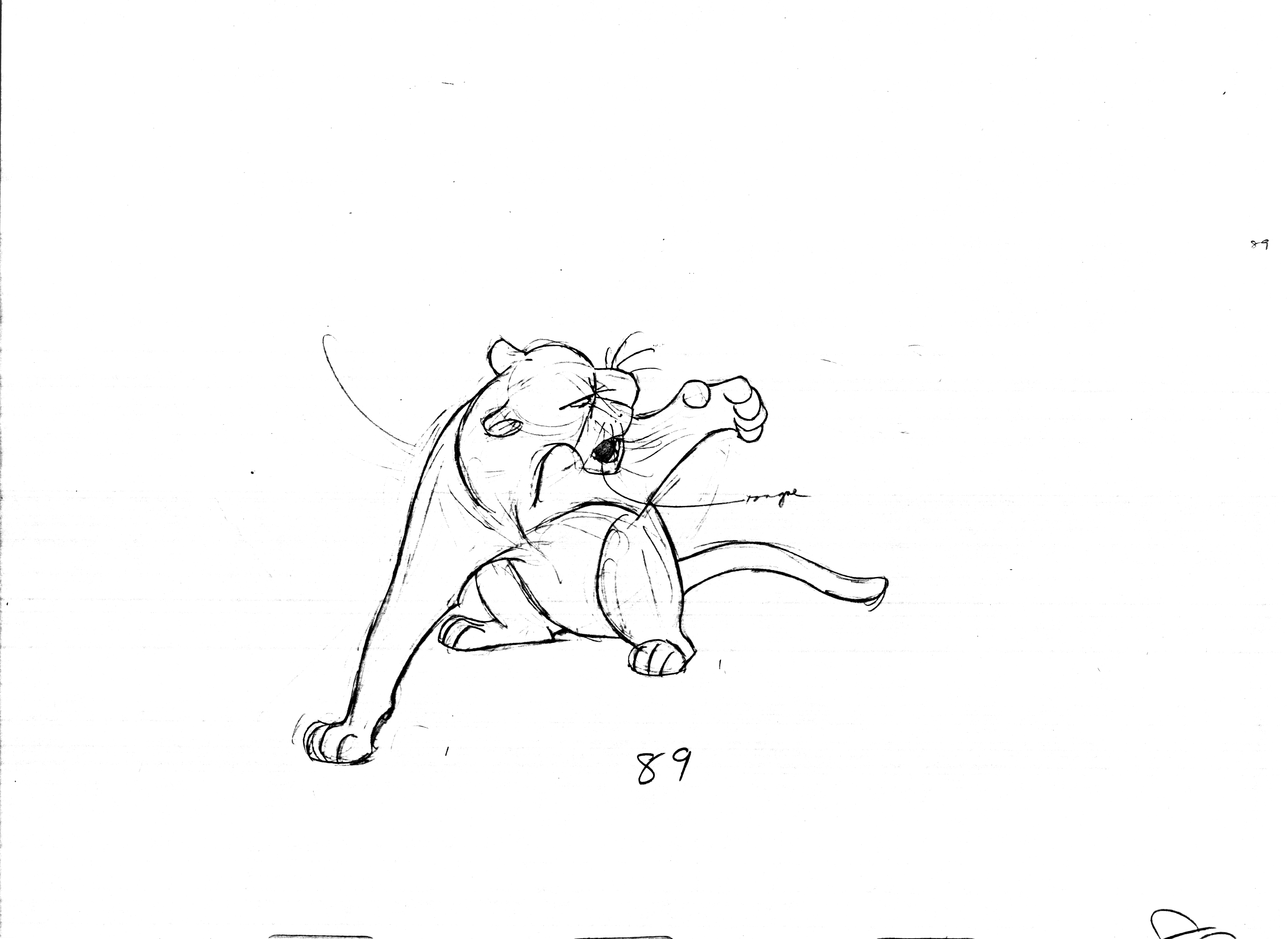


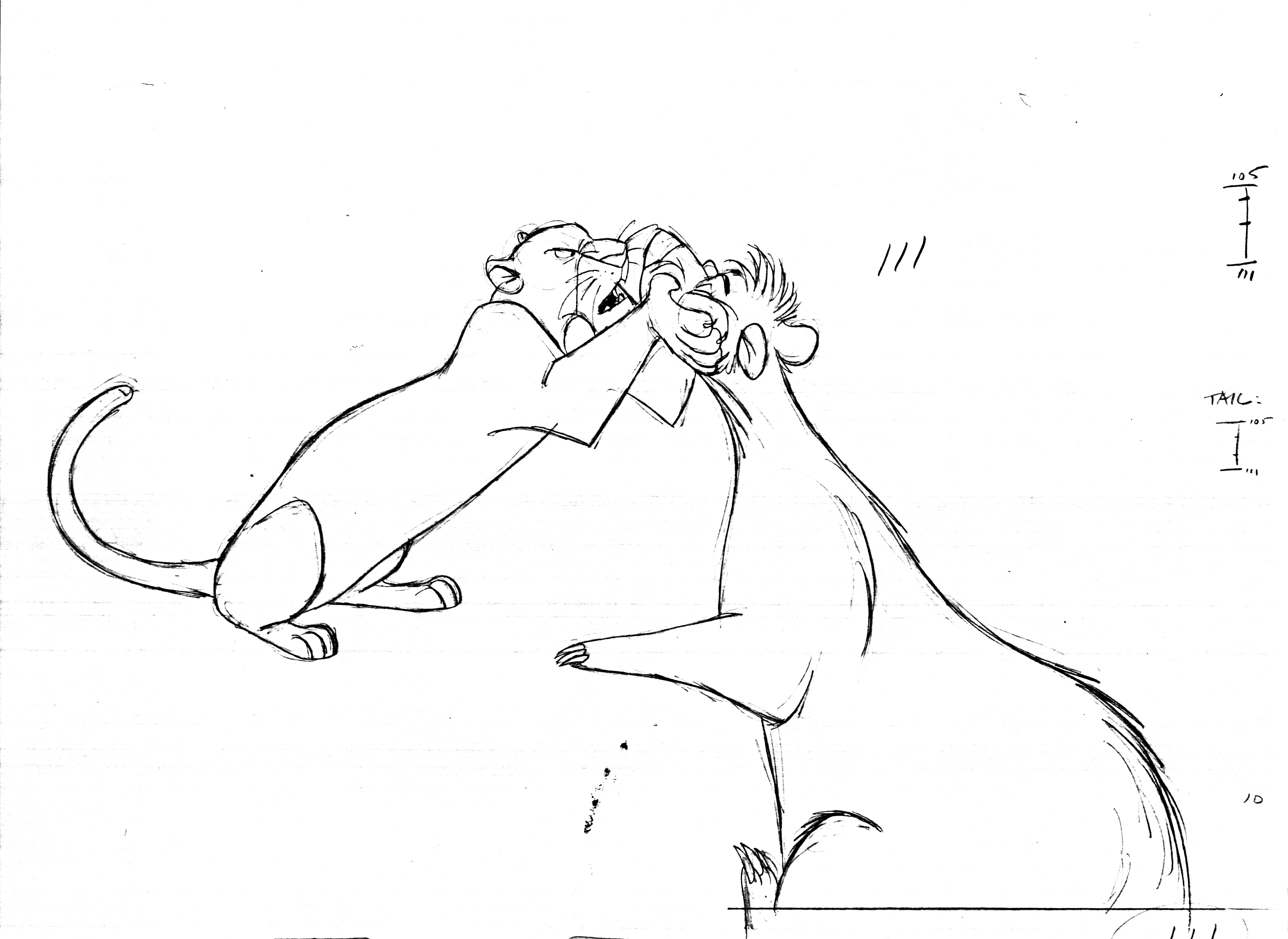


Be sure to click on the pages in order to see the beautiful sketches oversized!

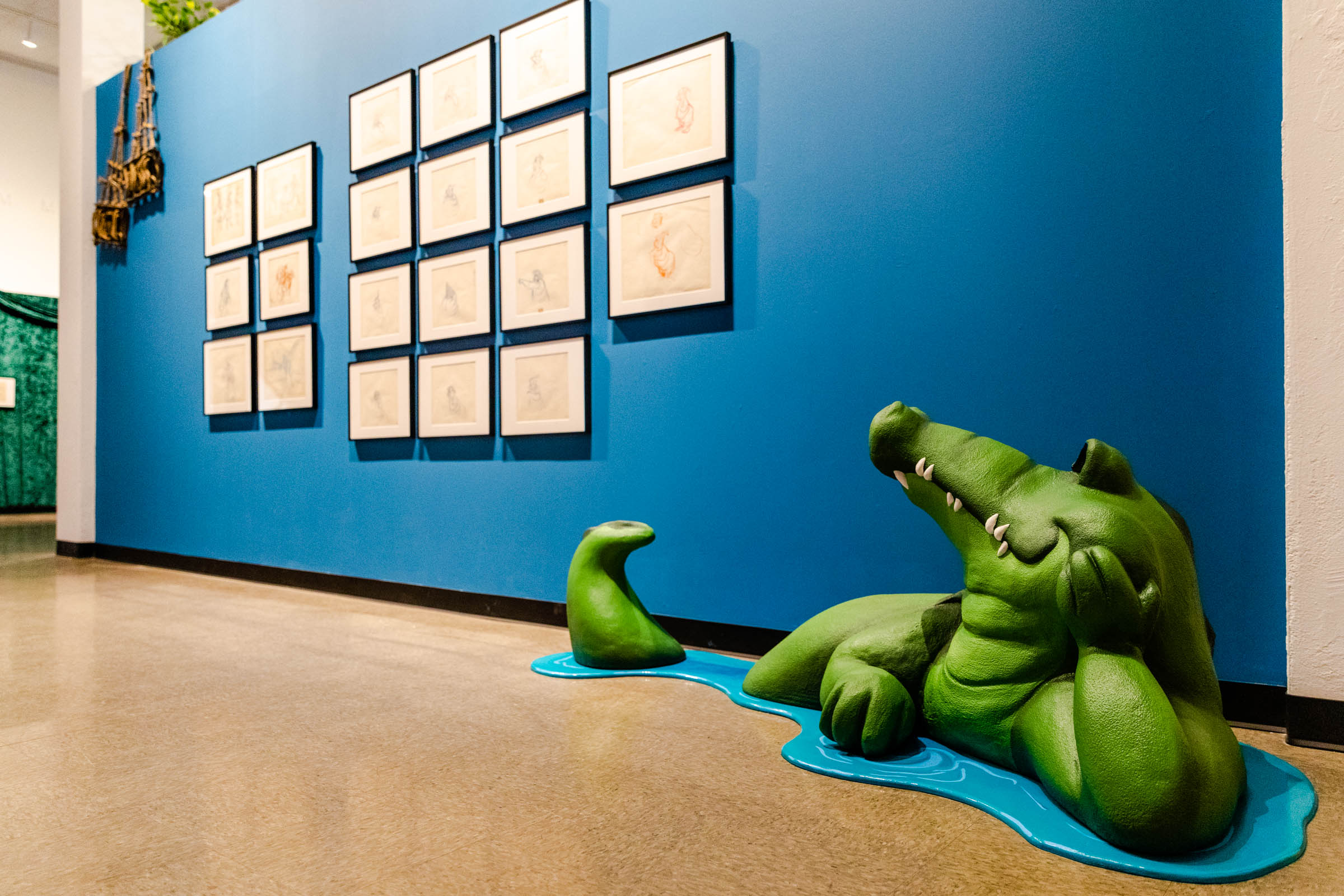
These gorgeous pieces are not part of the JUNGLE BOOK exhibition, currently at the amazing Walt Disney Family Museum in San Francisco. They were sold at auctions over the past few years.
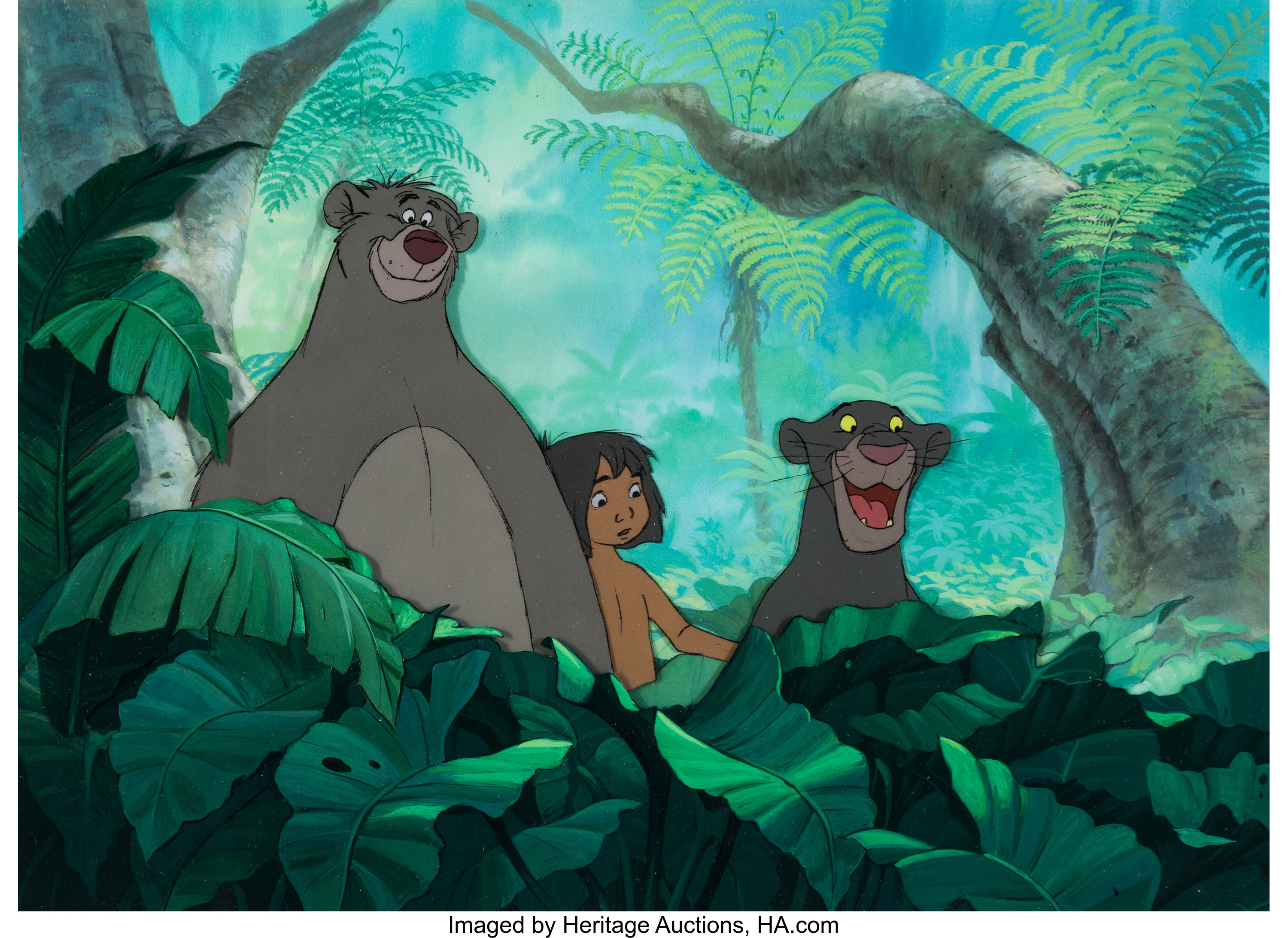
It still amazes me how the characters with black Xerox outlines work with backgrounds that are painted in watercolor/gouache with no black lines at all (Only a few BGs have some degree of dark linework).
After Walt nixed a Sword in the Stone approach to the art direction, background painter Al Dempster was called out of retirement to create this softer, more traditional approach to the backgrounds. As much as I love Walt Peregoy's early concept art, I am also very fond of the film's final art direction. It really is comparing apples to oranges.





Middle row: Ken Ralston, visual effects supervisor - Uli Meyer, animator - me, animator - Chris Knott, animation effects supervisor
Front row: Robert Zemeckis, director - Arthur Schmidt, editor - Richard Williams, animation director - Steve Starkey, associate producer
This was a sequence turnover meeting, where we looked at live action footage and discussed the animation that needed to be added.
Roger Rabbit, a once in a lifetime experience! The idea behind the film was irresistible.
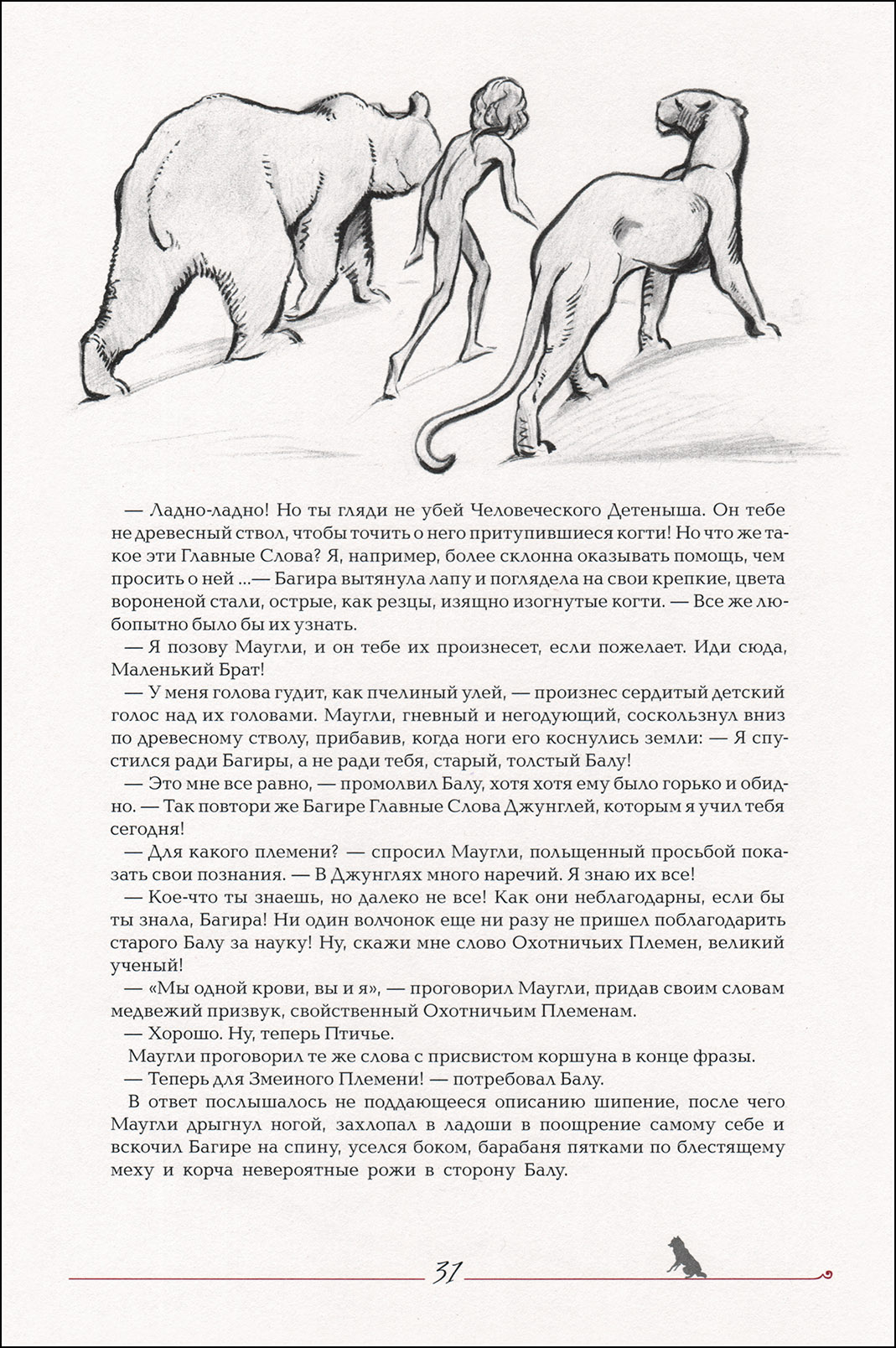
I recently came across this fabulous Russian artist who worked on several editions of Kipling's The Jungle Book. Vatagin lived from 1884 until 1969.
These illustrations show not only his knowledge of animal anatomy but also of specific animal behavior. Most of all it is clear to see how much he loved the natural world.
I found these interesting infos online:
Vatagin illustrated a great number of children’s books by Ernest Thompson Seton, Jack London, Vitaly Bianki and others, thus becoming a real live classic of Soviet book illustration. But it was Rudyard Kipling’s “The Jungle Book” that brought him fame and popularity. Vatagin started his work at the book in 1922 and continued it up to the 1950s. He created an enormous number of illustrations, about 200 in all, and returned to them many times. A book which came out in 1922 included about 100 illustrations. The 1934 edition of the book featured three to four small drawings on each spread, which show the plot development. In the 1965 edition there were fewer but more developed, expressive and finished illustrations. Vatagin made the drawings in black-and-white, with ink and pencil, in the auto-lithography technique. The wildlife here is full of danger, and the combination of black and white conveys the feeling of tension in the jungle (“Maughli Learned to Jump from Branch to Branch”, “The Herd was Already Unable to Stop”, “Hathi Stepped Forward — It Was Clear That He is the Master of the Jungle”). The artist also pays great attention to the details of Indian life. In all, there have been 12 editions of the book with the artist’s illustrations, and readers have loved his drawings just as they loved Kipling's tales