Wednesday, May 18, 2016

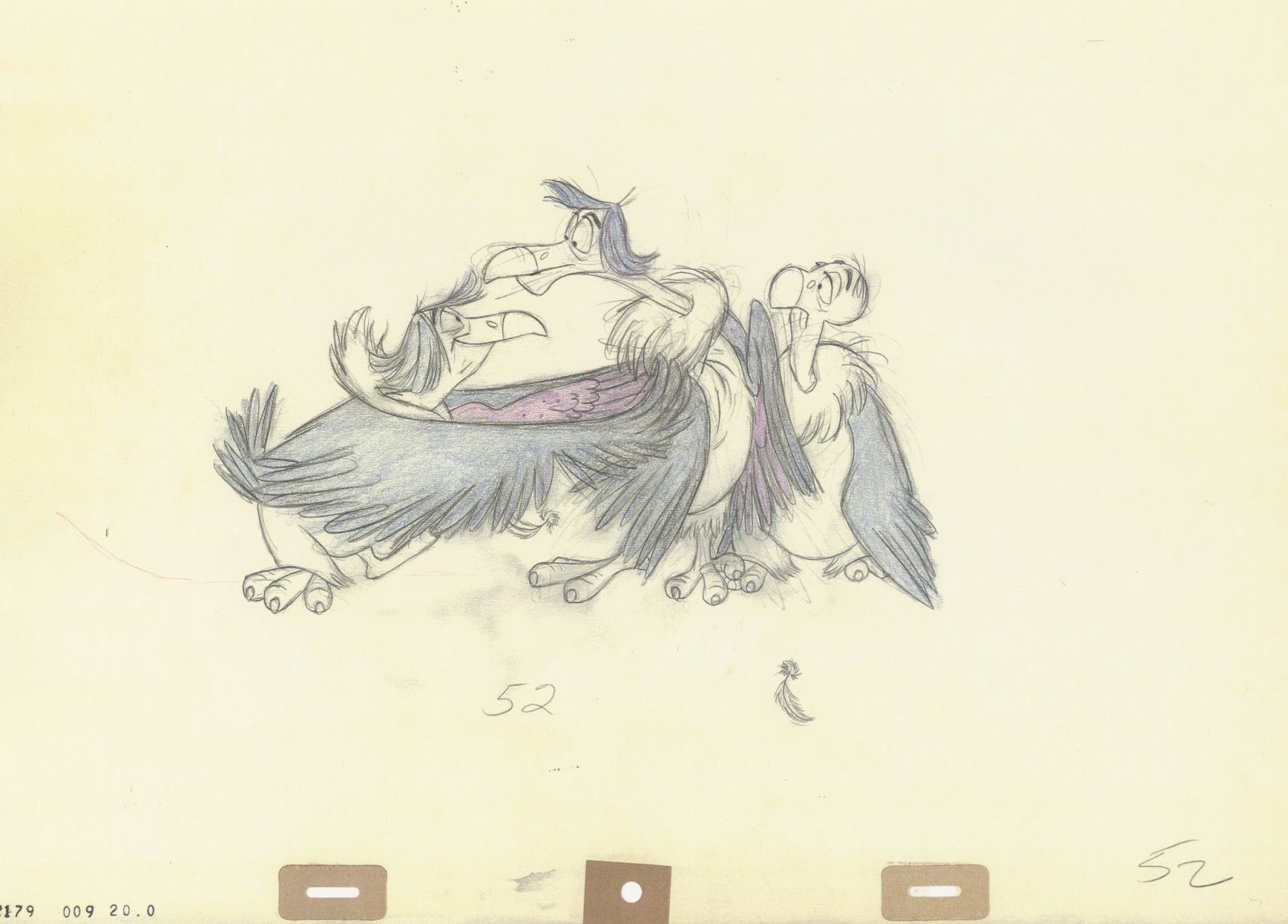
Jungle Vultures II

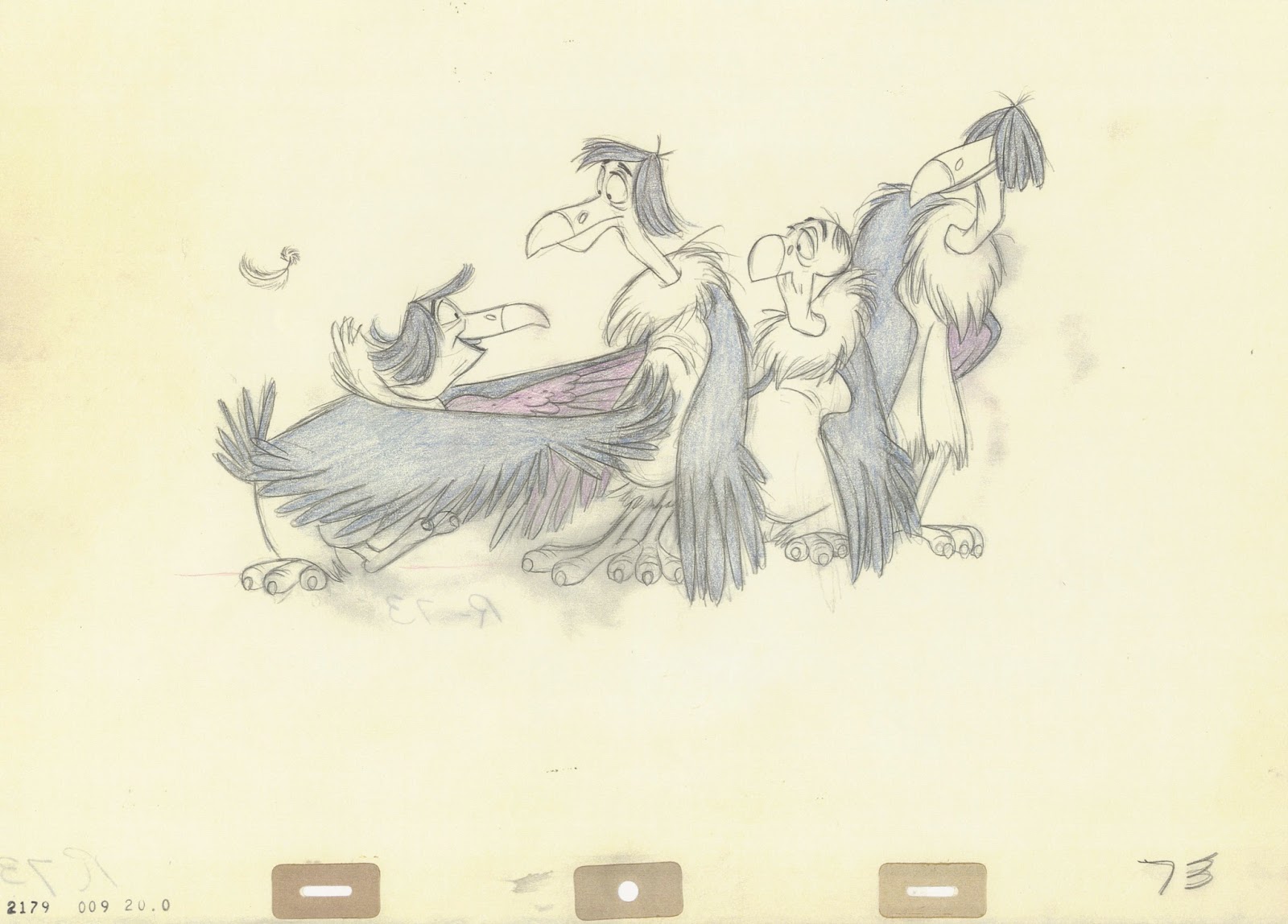
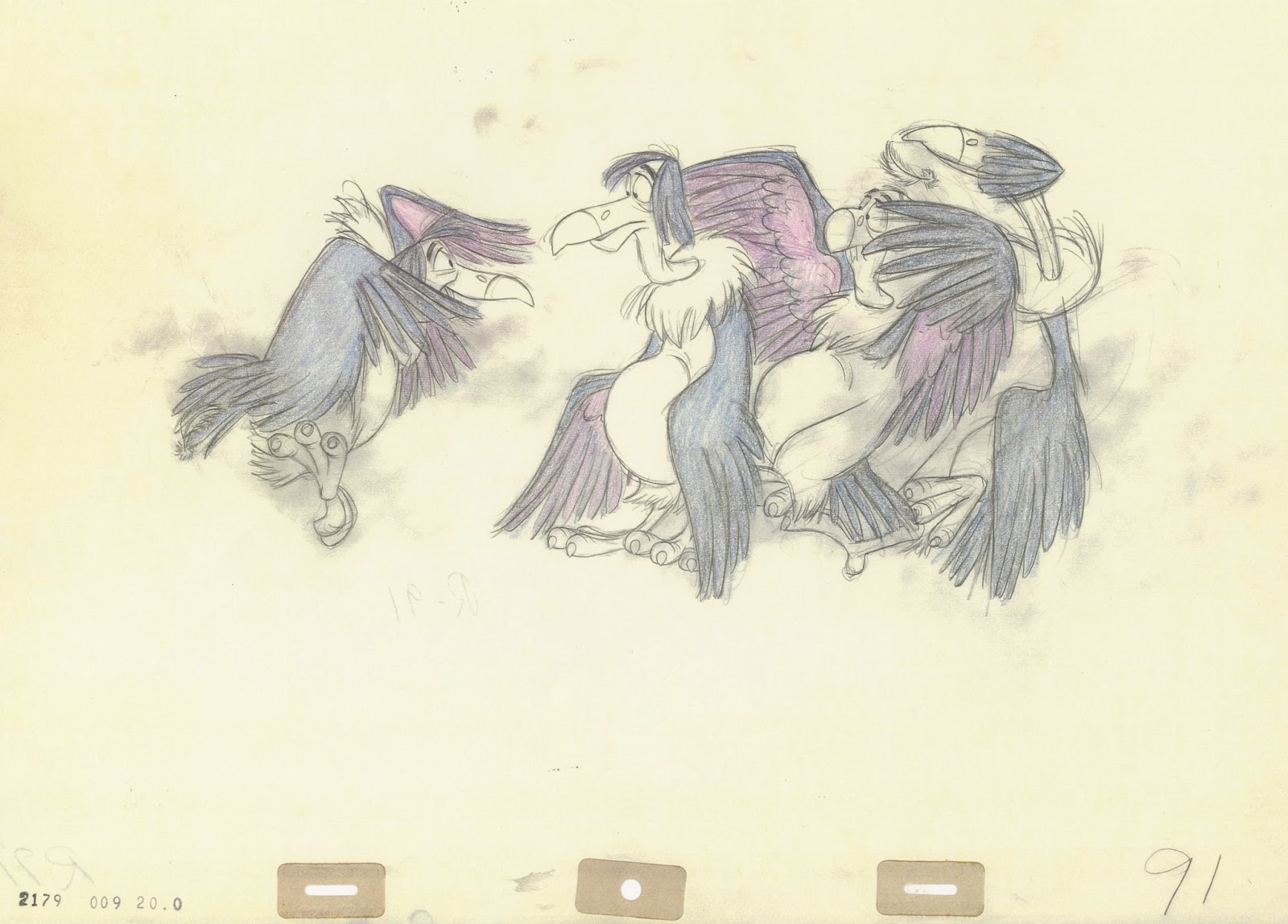
Here is part II of Milt's incredible scene which involves all four vultures. Those two posts only show a few of the main key drawings. From what I can tell, Milt did about every other drawing, twelve drawings for each second. His assistant (likely Dave Michener) then added in-betweens, so the action would be on ones, resulting in twenty-four drawings per second. 
Whatever you think about Milt Kahl as an animator, that man worked HARD! Not only is the intricate animation perfect, each single drawing is a masterpiece in design, and so full of personality!


Monday, May 16, 2016

Jungle Vultures


I am not sure who painted this color key for the opening of the vultures sequence for The Jungle Book, but the dark mood beautifully represents Mowgli's emotions. He is wandering alone through this part of the woods, before the vultures spot him in the near distance.
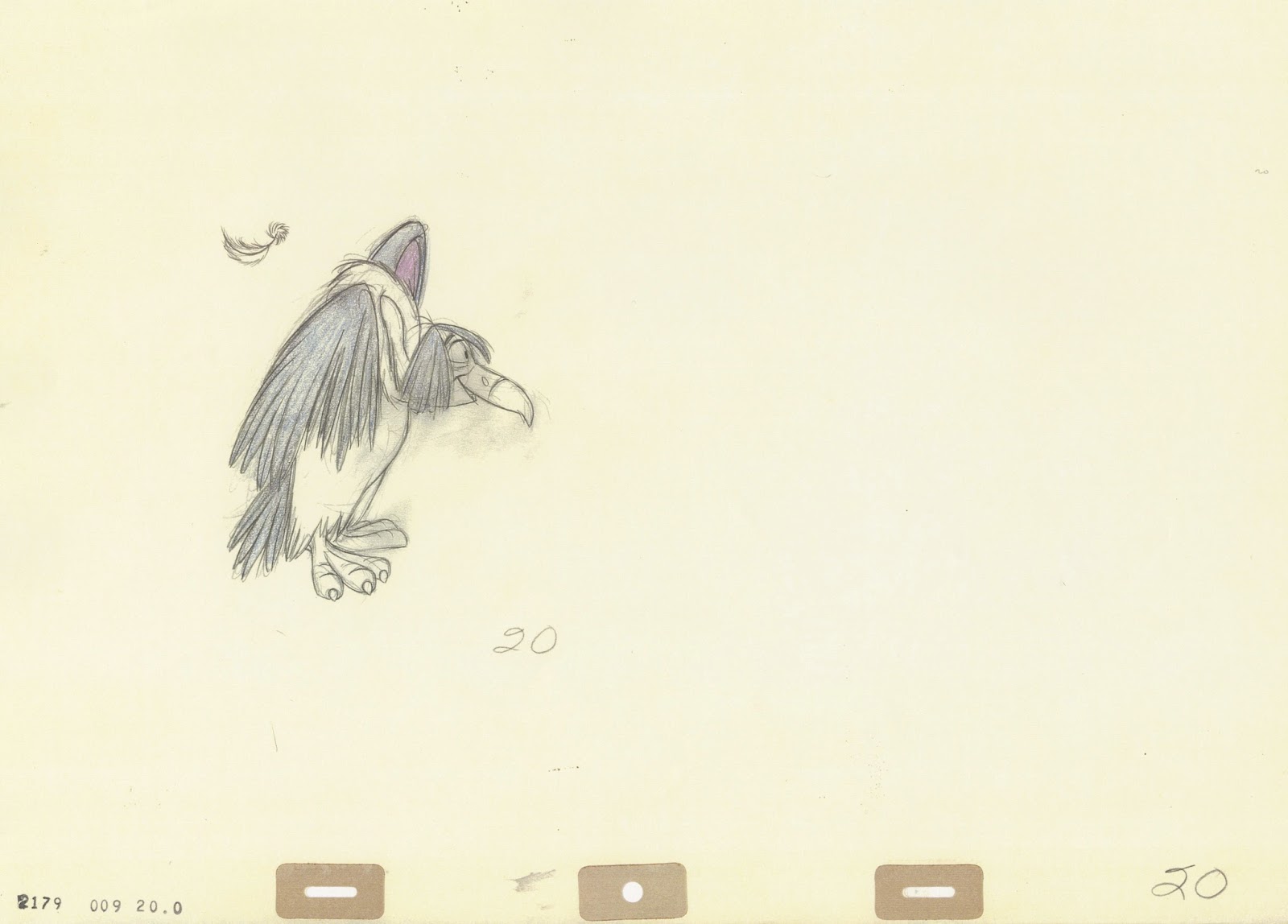
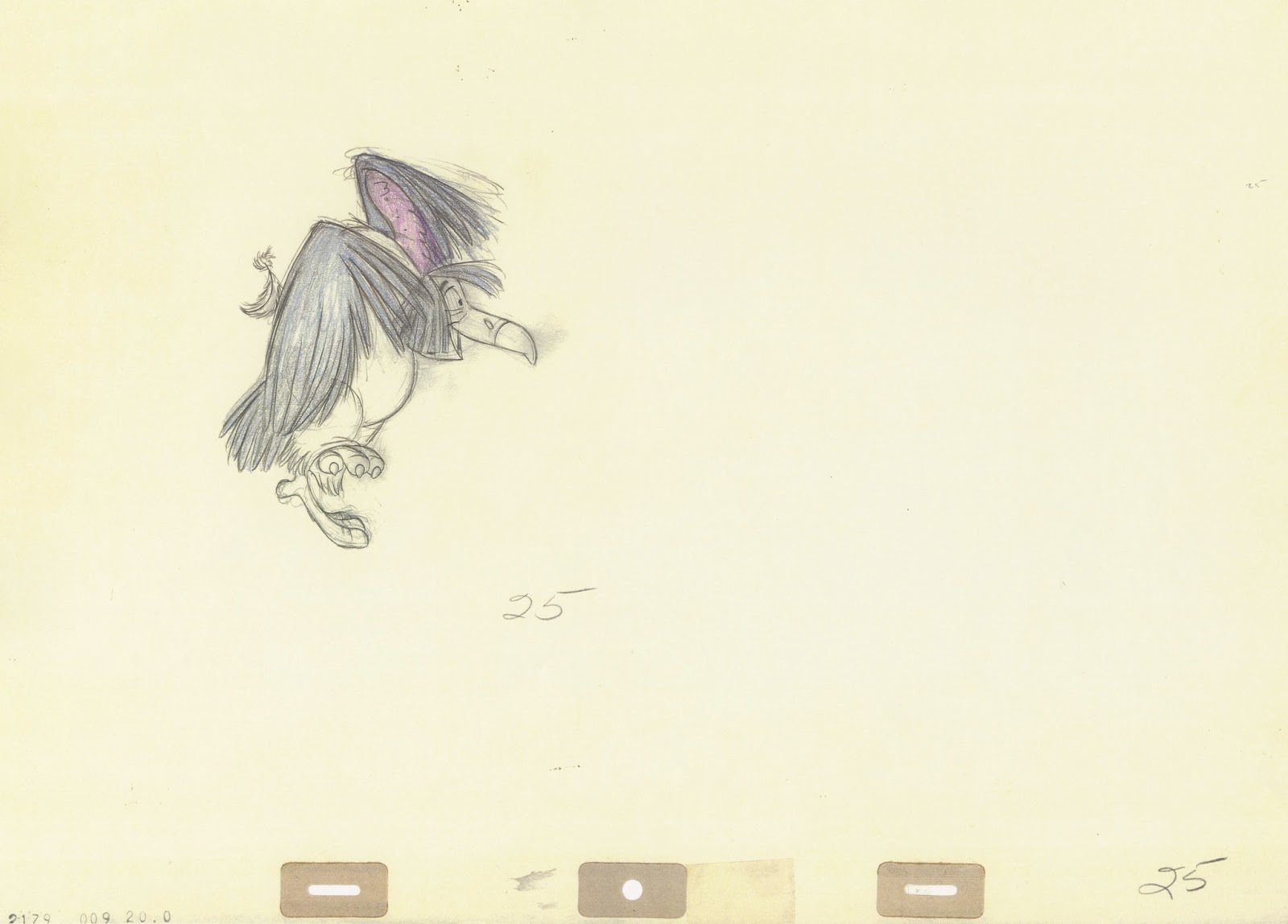
Milt Kahl animated all introductory scenes of these birds, and the following drawings from seq. 9, sc. 20 represent a glimpse into the mind of an animation genius.
One of the vultures, Ziggy, encourages the other three, Dizzy, Buzzie and Flaps to fly down the tree in order to examine this strange looking creature, which is walking on two legs.

"C'mon, lads, c'mon! Let's have some fun with this little fellah, this little blokey."
During this line of dialogue Ziggy moves toward the other three, repeatedly pushing on Dizzy, until one after the other looses their balance and stagger downwards.
A "tour de force" scene, to say the least. The overall motion is all on ones, as one bird after the other is being affected by Ziggy's pushy moves. A friend of mine commented that only a mad man could put all of this together and make it look natural.


This is why I love drawn animation, there is nothing like it!
Part II of the scene coming up.


Saturday, May 14, 2016

Flying Hands


This is the drawing that ended Tim Burton's career as a Disney Feature Animation artist.
Tim had produced endless designs for The Black Cauldron, all of them in his unique, personal style.
When it came time to come up with a look for the monster birds, the Gwythaints, most of us thought of conventional dragons types that would look for and kidnap the oracular pig Hen Wen.
Tim had this great idea for bat-like creatures with a hand shaped head. Everybody was pretty excited about this unusual idea, including myself.
But in the end the producers commented that it reminded them of the surreal 1968 animated film Yellow Submarine, a style they deemed  inappropriate for The Black Cauldron.
Tim left the production shortly thereafter, and produced a beautiful animated short stop motion film called Vincent.
It wasn't until after he left Disney that he became THE Tim Burton, when he was given the chance to put his mark on many live action as well as animated films alike.

More of Tim's work here:

http://andreasdeja.blogspot.com/2011/09/tim-burton.html

Thursday, May 12, 2016

German Expressionism and Disney


Someone needs to write a book on this topic. German Expressionism in film peaked during the 1920.
The still above is from the 1926 film Faust, directed by F. M. Murnau. The similarity to Disney's Night on Bald Mountain is not coincidental. German films from that period were screened and analyzed at the studio. The nightmarish imagery in its stylized form with an emphasis on frightening looking shadows influenced early Disney films like Snow White, Pinocchio and Fantasia.
Studio artists like Kay Nielsen and others applied these visual principles to the Chernabog sequence.


Disney's most frightening, haunting animated film making. More on Bald Mountain here:

http://andreasdeja.blogspot.com/2015/05/chernabog.html


Tuesday, May 10, 2016

Rubbing elbows...


...with Angela Lansbury last night during a panel at the Academy of Motion Picture Arts and Sciences. We celebrated the 25th anniversary of Beauty & the Beast.
It was wonderful to see everybody again after so many years. From left to right:

The Academy's Randy Habercamp, Angela Lansbury, yours truly, Richard White (voice of Gaston),
David Ogden Stiers (narrator and voice of Cogsworth), Robby Benson (voice of the Beast), Glen Kean, Mark Henn, Page O'Hara (voice of Belle),  Brenda Chapman (story), Roger Allers (story), Gary Trousdale (co-director) and Don Hahn (producer).


I told the story of how my first scene with Gaston (above) was met with criticism by Jeffrey Katzenberg, who said that the acting was ok, but Gaston didn't look handsome enough. In the original pencil test I had drawn him with a large jaw and a mustache...much cartoonier looking.


I remember enjoying animating this scene, in which Gaston puts down Belle's love for books.
Here Belle was animated by Ken Duncan.


It was important to me that the character -despite the demand for realism- had moments when we could exaggerate his poses. Story material and voice recordings just called for that kind of an approach.


Sunday, May 8, 2016

...And More Dalmatian Art


I could never figure out why this scene from 101 Dalmatians shows an out of focus background. Throughout the film all of the line drawing in the BGs are as crisp as the character drawings. But for some reason this close up of Pongo is accompanied by a soft, blurry background.
The previous feature Sleeping Beauty also contains a couple of scenes like this one, when Samson, the horse, is shown in front of an out of focus Eyvind Earle background...strange!
Maybe someone can come up with an explanation.


Frank Thomas animated this scene in which Pongo offers Anita's hat, as he feels somewhat guilty for the "wet" situation involving Roger and Anita.


I am not sure if this artwork is actual production, but the xerox line overlay sure doesn't register with the color painting. Beautiful color choices though.


An Art Stevens scene with major drawing help from Milt Kahl, who supervised the character of Roger.


A fun color model cel, featuring several characters in their early stages of visual development.


John Lounsbery second assignment involving buddies, this time around bad ones, Jasper and Horace. Just a few years prior John animated the Italian characters Tony & Joe in Lady and the Tramp.


It's astonishing to see how Marc Davis' rough animation remained intact on the screen. No clean up needed, which makes Cruella even more expressive.


Again, I'm not sure if this is final production artwork, but it is a beautiful depiction of the town of Dinsford, where the film's climax begins.
101 Dalmatians, one of the greatest movies of all time!

Some images Heritage Auctions.


Thursday, May 5, 2016

Get This Book!


...Ward Kimball says so. John Canemaker's beautiful book on the art and lives of Disney's Nine Old Men was first published in 2001. John chronicles the career of these artists thoroughly. There is plenty of art as well as rare photographs. This book is a must have for any animation professional or any Disney fan. I told John once that I feel he wrote this book for me, because I always felt there should be so much more known about them.
Fourteen years later I wrote another volume with my take on the art of these influential artists. Consider it an encore to John's book with a hefty offering of some of their best work.

If you want to complete your Nine Old Men collection, get the Bluray disc of Peter Pan. The bonus material includes Ted Thomas' fantastic documentary Growing up with Nine Old Men. (Outside of the US the documentary was released with The Jungle Book).


Woolie Reitherman working on Mickey and the Beanstalk.


A very young Milt Kahl working on graphic advertisement art a few years before joining Disney Studios.


Here is the link to Amazon:

http://www.amazon.com/Walt-Disneys-Nine-Old-Animation/dp/0786864966?ie=UTF8&keywords=canemaker%20nine%20old%20men&qid=1462515562&ref_=sr_1_1&s=books&sr=1-1