Tuesday, October 15, 2013

Johnny Appleseed


We are in Ollie Johnston's office, around 1947. He is working on the character of Johnny Appleseed, who was the original "man who planted trees".
This is a lovely short which was part of the feature length film Melody Time.
It tells the story of American folk hero John Chapman (1774-1845), who was on a mission to plant apple trees around the Ohio River region for many decades. 
Ollie animated the opening section of the film, where we first meet Johnny.
Milt Kahl is responsible for the song sequence, when Johnny's Angel demonstrates the many ways apples can be used in recipes. (One of my all time favorite animated songs.)
Eric Larson drew scenes with Johnny planting seeds and befriending wild animals in the forest.

Milt drew these rough model sheets to establish the look of the character. It turned out to be one of his least favorite assignments. He explained years later that to him Johnny was just a mild mannered guy without any strong emotions. Not much fun to animate.


A beautiful unfinished staging sketch by Milt. Old Johnny is following his Angel into a pink apple blossom sunset at the end of the film.


Vis Dev art by unknown artist and story sketches (by Joe Rinaldi).  What a beautiful inspiration for the animators to bring their characters to life.


Sunday, October 13, 2013

Mickey, Donald and the Rest


There was a time, around the late 1930s to the early 1940s, when the Classic Disney characters peaked in terms of their design, animation and things like book illustrations.
They had reached a level of appeal that was very unique to that time.
The last short films in which Mickey was drawn with solid black eyes up to the first films that introduced him with pupils within an eye unit define that period.
During the decades that followed, these iconic movie personalities still performed and entertained, but that special touch faded somewhat with time. One of the reasons for this development was the studio's main focus on its animated features, another reason proved to be economical circumstances. Theaters slowly realized that they could sell a feature length movie just as well without the typical opening of an animated short. So Disney and other studios spent less money and attention on characters that had defined the medium of animation not so long ago.

But that Golden age of Disney short films had a huge impact on regular audiences as well as on a number of graphic artists. American childrens' book illustrator Maurice Sendak once mentioned that, as a kid, he was so mesmerized by the Mickey Mouse films he saw, he felt like taking a big bite out of the screen.

That pretty much sums it up.

Let's start with this stunning magazine illustration that helped announce Disney's move from Los Feliz to Burbank in 1940. Everything looks appealing, even Minnie's shoes.


Incredible Book illustrations that somehow capture the innocence and wonder of childhood.
The characters jump off the pages, they seem alive and real.


Friday, October 11, 2013

Disney in 1946


Here is a magazine article from Picture Post, March 23, 1946. The studio was in production on a variety of short films to be included in the feature length movie Make Mine Music.
The writing is very odd, the author keeps wondering wether Walt Disney can be considered to be an artist or not. There is some misinformation, too. 
Who knew that an animator draws every 10th drawing? And that in-betweeners are relatively unskilled?
Much more interesting are the photos here. On the page featuring the animators, you see Kimball working on the section called The Whale Who Wanted to Sing at the Met. Great drawings. To his left hangs an early model sheet of the Siamese Cats from Lady and the Tramp, a film that wouldn't be in theaters until almost a decade later. Ollie Johnston is credited as Disney's top animator, while Milt Kahl, in the last image, doesn't get mentioned at all. (I don't know why Ollie is drawing tortoises, but Milt is studying dance moves in preparation for animating the lead couple in The Martins And the Coys section).
It's always great to discover behind the scenes photos like these.


Wednesday, October 9, 2013

Trying too Hard


I drew these characters from The Black Cauldron in this this publicity still a zillion years ago.
And yes, I tried too hard to make them look good. There is way too much focus on details like hands, fabric folds and fur. 
The staging and overall compositions are pretty weak. Embarrassing, There is no flow in these poses, everything looks overly chiseled. 
The humans in the photo are director Ted Berman on the left, then producer Joe Hale and director Rick Rich. 

I did a little better in some of these pieces.
A model sheet of The Horned King, signed off by SEVEN people.


A development sketch of Taran facing the Witches of Morva. Could be much better, but at least the composition reads ok.


I am going to brag a little about this drawing, it shows a visual idea for the Horned King's henchmen.
Marc Davis came by the studio to see what this new, inexperienced crew was working on. I remember him walking down a hallway, storyboards with design work on each side. He stopped at this sketch and said: "That's a great drawing." 
What? Did I hear right? I swear I remember Marc's comment as if it was yesterday.


These are my key drawings for a scene with Dallben. He is talking to Taran and taking a few steps toward the boy. They don't look too shabby, and the animation isn't all that bad either. But when I saw it in color I realized that the motion was strobing, the scene should have been on one-s.


This animation thing sure is a learning process. 

Tuesday, October 8, 2013

Tony and Joe


Tony, the proprietor and Joe, the chef of the Italian restaurant in the Disney classic Lady and the Tramp are among the best human characters ever done at the studio. John Lounsbery was responsible for their charming and very expressive animation. He took full ownership of this fun couple of eccentric Italians, all of their footage is Lounsbery's.
Animating dialogue that has a foreign accent is always a treat for any animator, and Lounsbery took full advantage of the possibilities that this assignment presented. Tony and Joe not only sound Italian, they act Italian as well. Big, broad gestures that define the Italian spirit. Their faces show a marvelous range of squash and stretch, and you feel the elasticity of skin in motion.

Lounsbery got a little help from a couple of actors who provided live action reference.
Tony on the left is played by Disney veteran Don Barcley, the actor who does Joe is unknown to me. The final animation though hardly shows any traces of such reference, Lounsbery made these two characters his own.
As you can see, Pluto had to sit in for Lady and the Tramp.


A couple of lively rough drawings from Lounsbery's desk.


Look at these expressive hands. We know that Milt Kahl was a master of articulating hands in animation, but so was Lounsbery.


A great story sketch by Joe Rinaldi, full of character and mood.


This final cel and background art shows a very skillfully painted and lit scene.
The calendar on the wall by the Geronomie Noodle Co. could be an in house reference to co-director Clyde Geronimi.


Saturday, October 5, 2013

André Franquin


André Franquin is a genius and a giant in the world of European comics. 
Most of his beautiful work was published in the Spirou et Fantasio comic magazine.
I knew of his art as a kid when I started reading stories with some of his iconic characters like Gaston Lagaffe (behind him in the photo) and Marsupilami. To this day his unique drawing style continues to influence countless comic strip artists all over the world. 
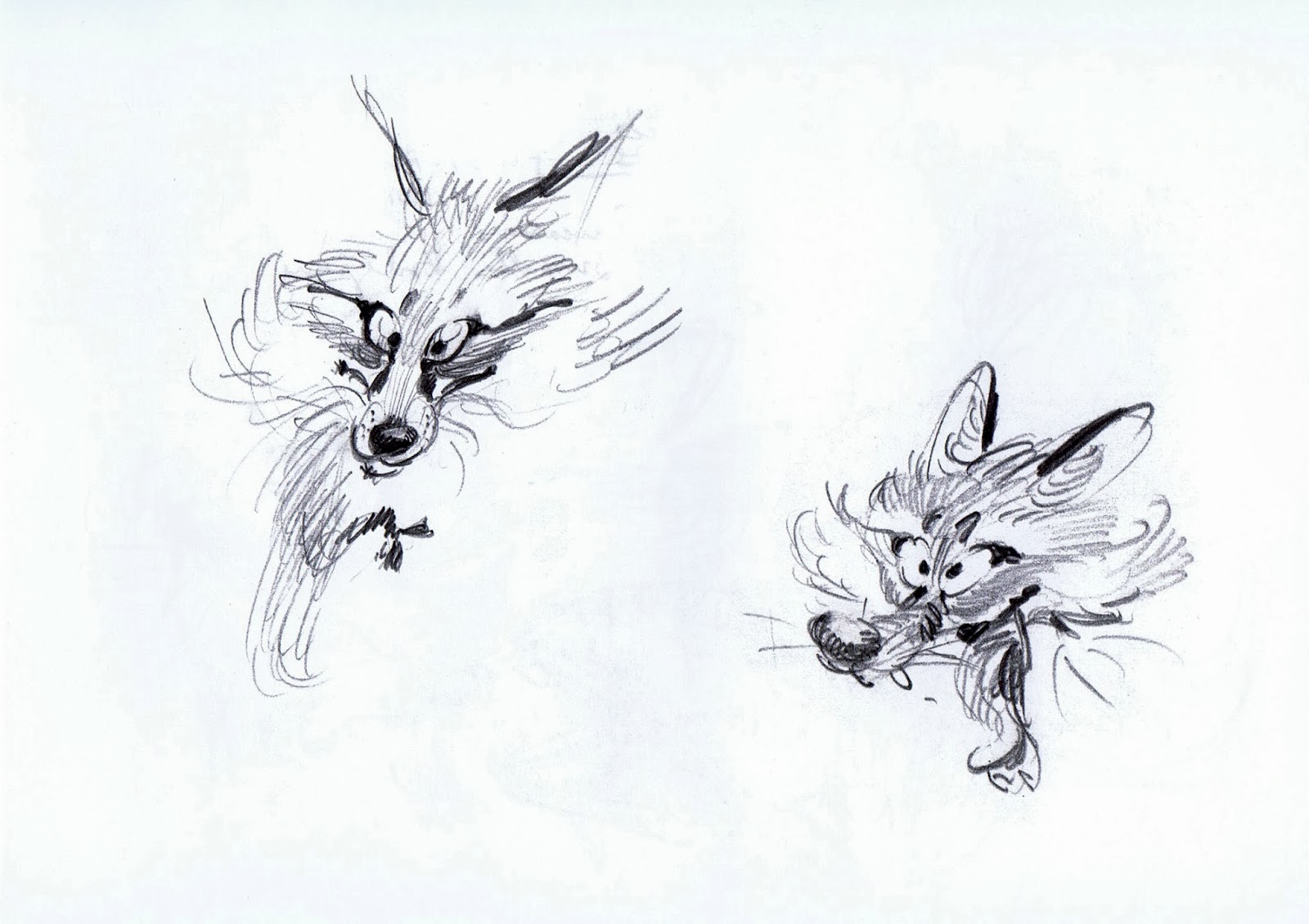
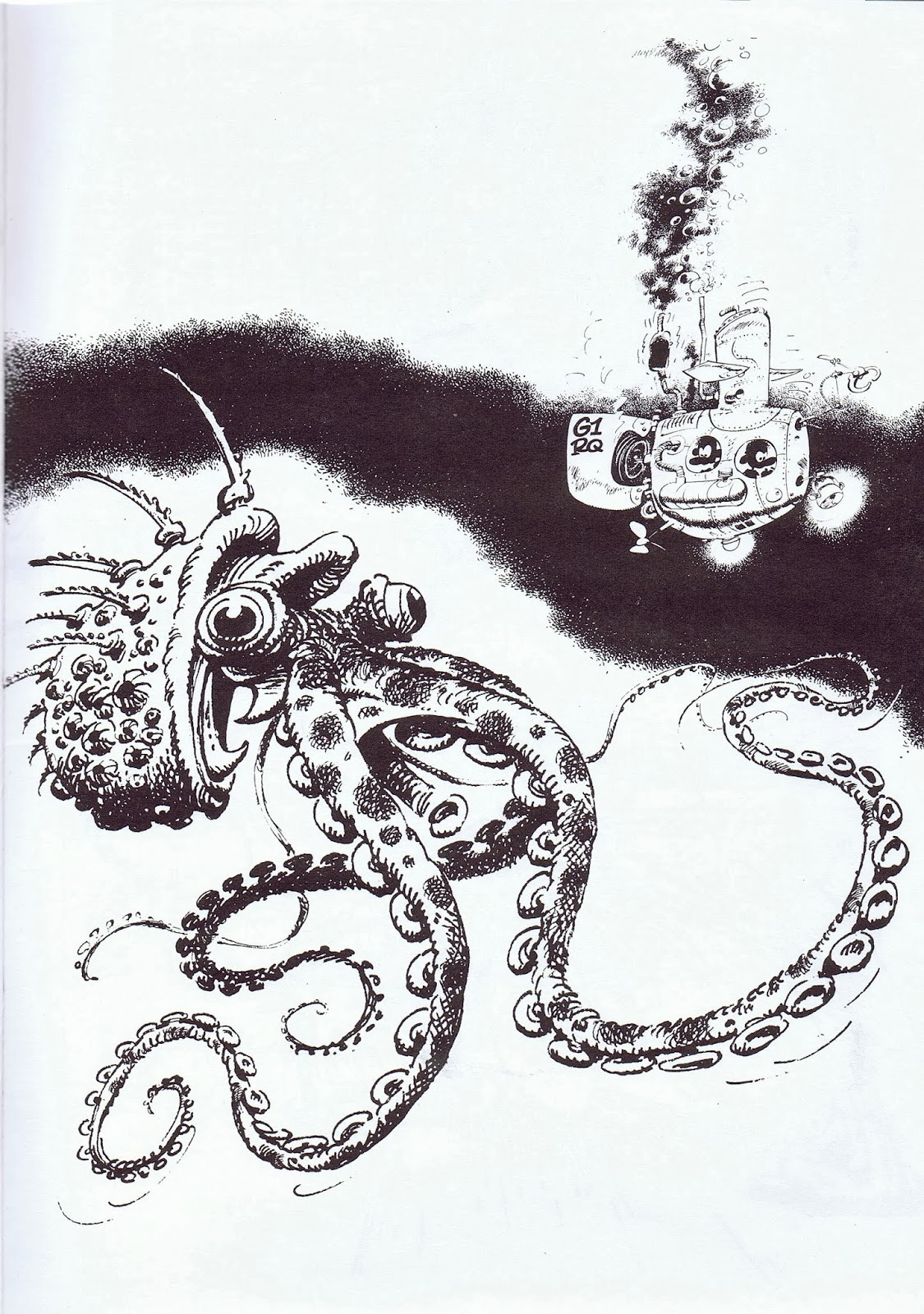
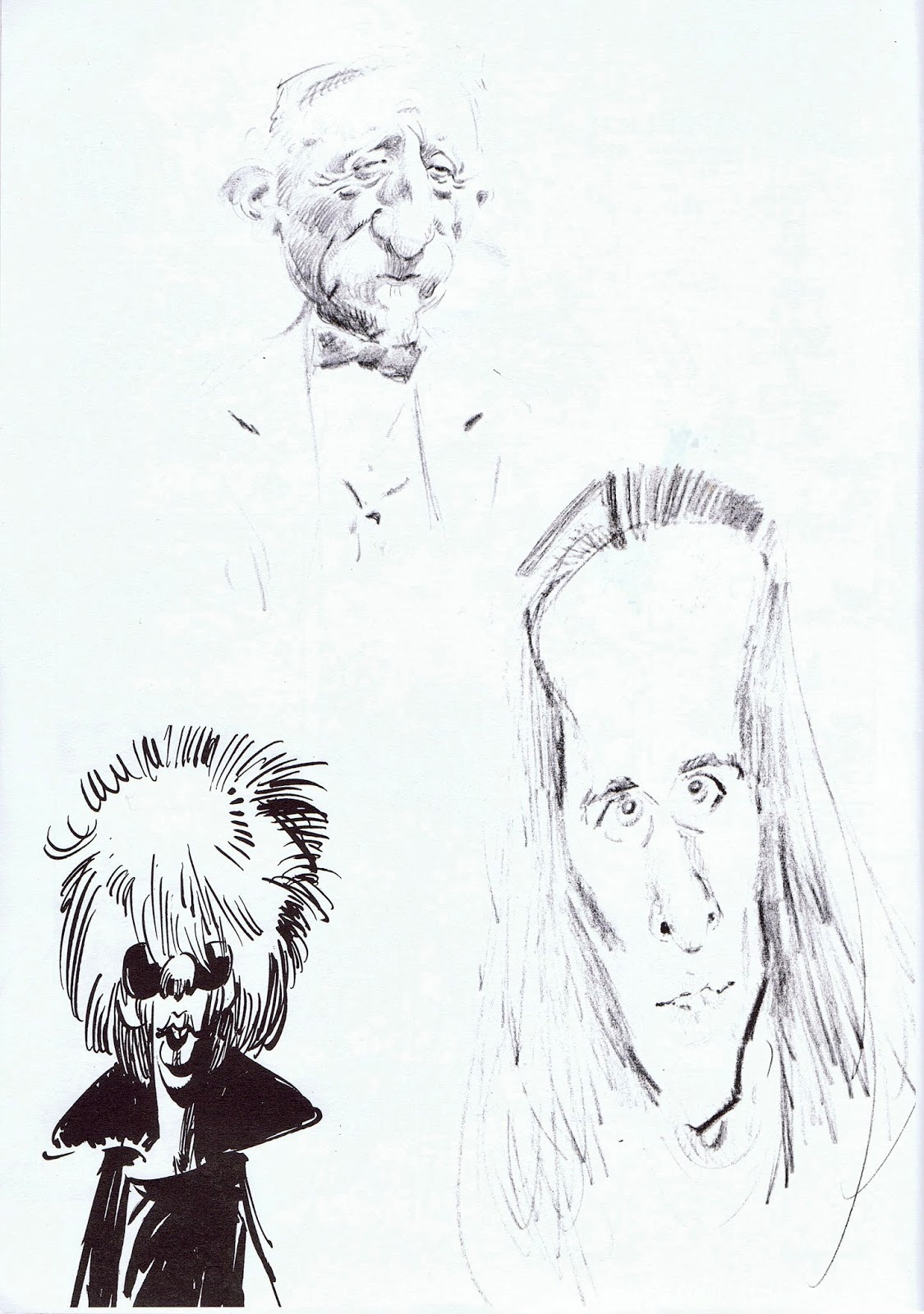
Franquin was Belgian, he was born in 1924 and died in 1997. He drew realistically very well, but his energetic, catooney and ultra appealing way of drawing is what made him famous. Here are just a few pages from one of his sketchbooks.


In the early late 1980s Disney was working on turning Marsupilami into a TV animation series (which did not turn out all that well). But in 1990 Franquin came to LA to visit Disney Studios. I remember getting a phone call in my office from our management. They asked me if I knew of an artist called André Franquin. He was being given a tour of the animation department at this moment. I almost fell off my chair. "Franquin is in the house" I yelled. "Frank who?" a colleague asked me. I ran down the hallway to meet this amazing artist. He was shy, soft-spoken, and he seemed somewhat surprised that a Disney animator knew of his work. Luckily I just happened to have the German edition of his famous "Idées Noires" ( Dark Thoughts, Alptraeume in German) in my office. I asked him to sign it, and he graciously added a drawing. Lucky me. 
The following pages are from Idées Noires.


All images © Franquin