Showing posts sorted by date for query caricature. Sort by relevance Show all posts

Monday, June 29, 2026

Aurora by Marc Davis

An exquisite sequence of rough animation drawings is currently being offered at Heritage Auctions. Animator Marc Davis was a master of combining a bold graphic style with graceful motion in the service of personality. While actress Helene Stanley's live-action reference footage provided a crucial foundation, Davis made necessary creative adjustments to successfully translate a series of photostats into poetic, balletic movements. Through caricature, contrasting timing, and exaggerated weight, he transformed reference into pure graphic action, making scenes like this one a profound joy to watch.


Thursday, December 29, 2022

Patrick Mate


Patrick Mate is an extraordinary artist, who works in the animation industry. He has worked for a variety of studios and is mostly known for his outstanding skills as a storyboard artist and character designer. The image above is his recent tribute to The Jungle Book. 

Patrick is also a master caricaturist. He painted these portraits of British character actress extraordinaire Margaret Rutherford, who played Miss Marple in four MGM movies during the early 1960s. I absolutely adore those films, my favorite being "Murder at the Gallop" from 1963. Amazon Prime offers pristine HD versions of all four movies.


What a great caricature of the one and only Greta Thunberg, as she tries to get her important message across with the help of a friend.


For much more on Patrick's outstanding work, go to his blog:

http://patrickmate.blogspot.com


Tuesday, December 6, 2022

Hibernating


At the beginning of the 2013 documentary "Growing up With Nine Old Men" film maker Ted Thomas pulls this sketch out of a cabinet. He doesn't give an explanation for the image or who the artist might be. Looking back at the drawing now, I am 89.573 % sure that Milt Kahl drew this during production of Bambi. You remember the scene from the film with Thumper's line about hibernating.

Bambi is a caricature of animator Frank Thomas, Thumper is Milt, and Flower is drawn as Marc Davis, who drew most scenes with that character. 

Perhaps Frank and Milt had caught Marc taking long naps after lunch.

By the way, the entire documentary has been uploaded in HD on Youtube:

https://www.youtube.com/watch?v=4NY0tu69G8k&t=670s


Wednesday, May 25, 2022

Random Disney Mix


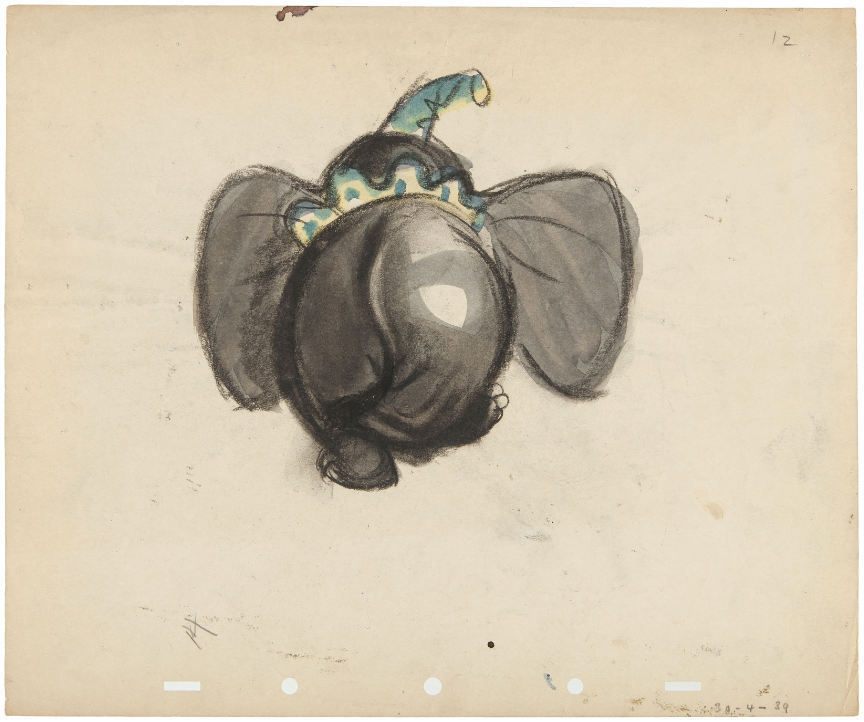
Here is a variety of artwork from classic Disney films over the years. What I love about the Dumbo sketch is the fact that even though this is a back view, it still reads like a symbol for the character. There is personality and entertainment.

Some Milt Kahl goodness from Bambi. Dick Williams told me once that he was astonished how the Disney animators were able to draw these deer with such dignity and grace. 


A beautiful development sketch for The Rite of Spring. Artists worked in all kinds of mediums when exploring this prehistoric world. 


This sensitive drawing was made for the 1938 short film Farmyard Symphony.


A clean up drawing of Donald Duck from a 1930s short. All of Donald's temperament is captured here. 
Great fluidity, weight and dimension. Animation probably by Fred Spencer.


Great caricature studies of one of the greatest animators ever, Fred Moore. That young man set a new standard for Disney personality animation.


Actress Helen Stanley acts out a scene for the character of Cinderella. Live action reference can be tricky and lead to stiff results on the screen. But Eric Larson and Marc Davis knew very well how to apply the reference while maintaining fluid animation. 


What amazing colors for Tweedle Dee and Tweedle Dum. The Disney color model department was out of this world.


A beautiful story sketch by Joe Rinaldi. Terrific attitudes and staging. People still mistake his work for Bill Peet's. 


A large cel of Trusty from Lady and the Tramp. Again, beautiful colors and impeccable inking. Just a joy to look at. 


A quintessential scene from The Jungle Book. This is a touch up drawing, meaning that the clean up artist worked over a rough animation drawing by Ollie Johnston, on the same sheet of paper. Look at how thin and delicate the lines are. Unfortunately the current streaming version lost this particular quality. The film's original format was close to 4:3, but when you zoom into the image to create 16:9, you loose the top and bottom of the screen as well as the thin line quality.
Be sure to plan and visit the exhibition of Walt Disney's The Jungle Book, Making a Masterpiece. It opens next month at the Walt Disney Family Museum in San Francisco.


Wednesday, April 20, 2022

Disney in 1978


In 1978 concept artist Mel Shaw was working on several potential future animation projects. Among them Catfish Bend, The Little Broomstick, Musicana and The Black Cauldron. At that time The New York Times interviewed a few of Walt's artists regarding the state if the art form called Disney Animation. Its future seemed  uncertain, there was a need for new talent as the old folks were retiring. I was lucky to get hired by Walt Disney Productions two years later. 

Here is the article from the Times. I did my best to correct a few grammatical errors which were the result of a digitized online version of the actual newspaper page. 

LOS ANGELES “THE BLACK CAULDRON” Walt Disney's $15 million animated film scheduled for 1980 — is four years behind schedule. It will not be completed until Christmas, 1984, because the new crop of young animators the studio has spent six years acquiring are not yet competent to handle its complexities. “The Black Cauldron,” which is based on Lloyd Alexander's interpretations of medieval Welsh mythology, will be replaced in 1980 by a simpler and easier movie about animal friendship, “The Fox and the Hound.”

At the same time that Disney's young animators are floundering in waters still too deep for them, classic Disney animation is enjoying a surprising artistic and box‐office renaissance.

The re‐release of Disney's 1967 “The Jungle Book,” is bringing the studio $14 million, $2 million more than the picture made when it was first released 11 years ago. And the studio's last animated film, “The Rescuers,” is outdrawing “Star Wars” in Paris, as an adult cult film in Western Europe, it has earned $45 million for the studio, and has recently become the largest grossing picture of all time in West Germany.

Mickey Mouse Turning 50

Next November Mickey Mouse will be 50 years old, having first appeared in “Steamboat Willie” on Nov. 18, 1928. The empire he founded is robust. Disneyland and Disneyworld have been successful beyond even the dreams of Walt Disney who — against all advice — borrowed against his studio to build them. Last year the company earned $82 million on 'sales of $629.8 million. During the first nine months of this year the studio has had record revenues of $499,388,000 and record net in come of $60,915,000.

But the last Mickey Mouse cartoon was made in 1953; and only ‐two of the nine young men who cut their artistic teeth on “Snow White” in 1938 are still at the studio.

“We never get old, never die, never retire,” said 73‐year‐old Eric Larson. “We accepted that and the studio accepted it. They never looked beyond us. “

“We thought we were always going to be 21 years old,” said Ward Kimball, who retired in 1973. “We thought we would always be putting goldfish in the bottled drinking water, balancing cups of water on the light fixtures, changing the labels on cans of sauerkraut juice. We were 21 years old, Walt was 30, leading the pack. Working there was more fun than any job I could ever imagine.

Pompousness ‘Rewarded’

“I worked the first two weeks for nothing and then got $15 a week. There was no pay for overtime and no air conditioning.

We stripped to the waist in the summer and if a guy was taking himself too seriously we'd stick a flutter pad under his seat so he'd make rude noise when he sat down. There were 180 people at the studio, including the night watchman and the janitors. Today, it's a corporate structure, large and complicated place.”


Walt Disney called them his nine old men: Les Clark, Marc Davis, Ollie Johnston, Milt Kahl, Mr. Kimball, Mr. Larson, John Lounsbery, Wolfgang Reitherman and Frank Thomas.

“The Rescuers,” exactly 40 years after “Snow White,” is the last film to bear their stamp. Mr. Lounsbery directed “The Rescuers.” Mr. Thomas and Mr. Johnston animated the mice—Bernard and Miss‐ Bianca — in the months before their retirement. Mr. Kahl drew the villainous Medusa and her 2 alligators and also retired.

Talent‐ Search Is Unproductive

When his nine old men really became old. Walt Disney was dead; and his studio was unprepared. A talent search begun by Mr. Larson in 1972 has brought surprisingly meager results.

“We'd like (to add) 30 good animators,” he said. He has looked at thousands of portfolios and tried out 100 young animators in the last six years. Of those, 35 remain; and only 16 are in animation. “When someone is hired, you can't tell how good he'll be,” Mr. Larson said. “ Animation is limited only by imagination and the ability to draw what you can imagine.

“People come with master's degrees in art and they can't draw worth damn. Art teachers are interested in static figure drawing. We deal with weight, action, movement. You have to be able to draw the relationship of character's coat to the rest of his body or the relationship of his cuffs to the rest of his coat.”

Conception of Space Vital

“A person can show you drawings that knock you out,” said Mr. Kimball, “but he may not have a conception of movement, may not be able to put something in a space. And there are more choices today. A lot of young animators don't want to work here, don't want to knuckle down to the training required of Disney animators.”

Disney has its own reservoir in the animation school it has set up at the California Institute of the Arts to teach the Disney style of animation. Yet, out of 19 portfolios from Cal Arts this year, Mr. Larson found only two good. “And three more are passable.” The special skills required in animation mean that, in the movie business, where nepotism is a way of life, there is almost never a second‐generation animator. Mr. Larson can think of only one, John Kimball, Ward Kimball's son.


Disney's Death a Blow

The death of Walt Disney in 1966 was a special blow to his animators. Movies — regarded as the most collaborative of arts — seem a hermit's paradise next to the number of people required to create the 129,000 drawings used in an animated feature. “Walt had such an ego, he was so tremendous, that he could weld us into a team,” Mr. Larsbn said. “It's a big problem for these new people to become a cog in a team effort. They want to be in ‘the industry,’ not at this particular studio. There was a loyalty to this particular place. And I'm not sure we can renew it.”

“I don't think there has ever been an artistic medium that requires as many people,” said Mr. Reitherman, who is directing “The Fox and the Hound.”

“It's definitely a team sport. But how do you train a young animator? A feature film is very expensive. ‘The Fox and the Hound’ will cost $8.5 million. And it's four years of pregnancy before it's finished. We used to make 24 shorts a year. We don't have that way to train people anymore.”

Shorts Were Great School

“I was at the studio five years before Walt made his first feature,” said, Ward Kimball. “We made six or seven minute shorts. What a great school to break in new animators. You could see your work on the screen in weeks.”

Today, shorts lose money. The last Disney cartoon was “Winnie the Pooh and Tigger Too” in 1974. Partly to give the young animators some experience, the studio is now making a 25‐minute animated short, “The Small One,” which will be released next Christmas. The director of “The Small One” is 39year‐old Don Bluth, the most highly regarded of the next generation of Disney animators.

Then the younger animators will face a New‐style Disney film, “The Black Cauldron,” requiring a whole new generation of animators (with more sophisticated characters than) the happy dog and cheerful fox of “The Fox and the Hound. The Black cauldron, is a kettle that has the ability to bring the dead to life and is guarded by three witches who can interchange themselves.

“As far as drawing is concerned, entertainment is concerned, background and layout and effects are concerned, that's terribly challenging staging,” Mr. Larson said.

“The picture also has a boy hero and a girl heroine. As soon as you start working with human figures, you let the audience compare their movements with the movements of a real person the same size. Animals and’ caricature figures like Medusa are much easier.”

What makes it all so difficult is that, beyond technical competence, there is something more important to men who speak of animation as magic rather than skill. “Animating isn't moving things,” said Mr. Larson. “It's trying to make them live.”

“Shere Khan in The Jungle Book’ didn't really look like George Sanders, the actor who was his voice,” Mr. Reitherman said. “But he had the imperious attitude, the arrogance. He was the essence of George Sanders; Eva Gabor said the tiger was more like her husband George Sanders, than Sanders (himself).

“I retired,” said Ward Kimball, “because I was beginning to get bored. Maybe subliminally I missed Walt. Without him, things weren't fun anymore.


Monday, April 18, 2022

Raven Studies


I am not entirely sure if Marc Davis drew these analytical bird studies. They do show a sense for observation and research that reminds me of Marc's anatomical explorations. But the writing on these sheets isn't his. 
Nevertheless this kind of work is so necessary in order to animate an animal convincingly. When you are at the point where you know the real structure of a creature, then you can go to town and animate, caricature and exaggerate. 
Eric Larson did some nice cartoony bird animation on Sasha from Peter and the Wolf. Ollie Johnston animated Orville in The Rescuers beautifully. He also drew key scenes with Archimedes for The Sword in the Stone. My favorite Disney bird animation is by Milt Kahl on The Jungle Book. The way he brought those four vultures to life is mind boggling.  

There are a few non personality birds scenes in MUSHKA. Effects animator Daniel Ernesto took care of those beautifully. 


Tuesday, March 30, 2021

Rotoscoping

 Here is an early example of live action use for animation at Disney. All human characters in Snow White and the Seven Dwarfs relied on rotoscoping, except for the dwarfs. The more realistic a character concept, the more live action footage was used to help the animators get a nuanced performance on to the screen.

But rotoscoping is a tricky business. If not altered and interpreted by an animator, the result can be stiff and lifeless. Changes have to be made in order to portray these filmed performances for for graphic motion. A good animator will mess with the timing and proportions of the photostats.

Some of my favorite Disney characters who were successfully based on live action are Cruella de Vil and Roger and Anita Radcliff. Their design has various degrees of caricature, but the motion always feels reel.

Then there is Cinderella's Stepmother, a very realistic looking character based on live action, and she comes across as being very powerful.

Milt Kahl's comments about the use of live action cracks me up: "If you are going to have realistic animated human characters, I think the use of live action is necessary. If everybody on the picture was a Milt Kahl it wouldn't be necessary. But unfortunately they aren't."

Here is the Hunter from Snow White.


Saturday, May 25, 2019

Another Great Marc Davis Sketch


I forgot how long Marc Davis worked on story for Bambi. He told me once, I think it was about five years. Marc skipped Pinocchio and Fantasia in order to focus on the challenge to develop sequences with realistic but expressive animal characters for Bambi
In this particular sketch it's Thumper who just kills me. What an appealing, gorgeous, all around wonderful caricature of a rabbit.

I this photo, years later, Marc is pretending to work on Lady And the Tramp.
As a matter of fact, he skipped this film as well, so he could do designs for the next Disney film Sleeping Beauty. Marc created endless characters for crowd scenes, but as you all know, focused on Aurora and Maleficent.


Thursday, May 23, 2019

Marc Davis Bambi Research


A few sheets with beautiful development drawings for Bambi by Marc Davis were recently offered at S/R Labs auctions.
They remind me of what Frank Thomas once said, that without Marc's thorough deer studies quality character animation would not have been possible.
Marc found just the right balance between realistic anatomy and human expressiveness.
He developed appealing designs that could be animated.
Animated by only a few artists who were willing to take on this challenge of studying the heck out of deer anatomy, then adding subtle caricature and acting.


Thursday, January 10, 2019

Milt Kahl Moves


A great self caricature of Milt Kahl announcing his change of address. Not sure exactly when this occurred, but I have a way of finding out. I googled the address and these images came up.


PS This image was offered on eBay a while ago. I believe it is a tracing of Milt's original ink drawing.
Here is a version from online, which I believe to be the original.


Tuesday, November 27, 2018

Joe Grant


Joe Grant was one of a kind. I am pinching myself when I think about all those years working with him on various Disney films.
Many of you know know that Joe had a Disney career twice. First from the early 1930s to the mid 1940s, and then again from 1989 until his passing in 2005 at the age of 96.
His quirky sense of humor is evident in his 'Idea" sketches. He would do a series of those, and a new film sequence was born. Or a complete short film. 
Joe didn't mind answering our questions about the Golden Age at Disney, but he rather preferred to discuss the present and the future of animation. He watched almost every animated programing from The Simpsons to SpongeBob. Joe was a student of fine art, some of his favorite "cartoonists" were Kley and Sullivant.
I will never forget right after Joe returned to Disney for a second run, Frank Thomas phoned him and asked: " Why on earth are you back at the studio ?"
Joe replied:"Why aren't you?"


The brilliant short film Lorenzo was Joe's idea. His sketches are on the left, director Mike Gabriel's
designs on the right.


A brilliant caricature by John Musker. Man, would I love to animate this design. 
Oops, I just had an idea for another short film!


Monday, May 7, 2018

Sullivant Original


I do own a few TS Sullivant originals, but not this one. It was offered by Heritage Auctions late last year.
Just like every Milt Kahl drawing, each Sullivant illustration represents an adventure in humorous, graphic exploration. EVERYTHING is entertaining, the animals' anatomy, the insane sense for caricature, staging and on and on.
The caption is very funny, too. Here is what Heritage said about the piece:

Thomas Sullivant Life Magazine Illustration Original Art (Life Publishing Company, 1921). Before LIFE magazine was purchased by Henry Luce in 1936 and become the long-running photo-magazine American institution it is remembered as, it started in 1883 as a humor magazine similar to the British Punch. This whimsical cartoon illustration from 1921 features only a portion of the caption, but in it, Mrs. Hippo asks Mrs. Gnu how her children are. Mrs. Gnu replies that one of them has gnumonia, to which Mrs. Hippo says that is "bad gnus". At least this Dad-joke has charming artwork crafted in ink on an oversized 25.5" x 17.25" sheet of Bristol board. Signed in the lower left of the image area. Toned, with edge wear, torn caption, and a missing bottom left marginal corner. In overall Very Good condition. 

Over the years I have posted numerous times on Sullivant's art. Here is the first one:

http://andreasdeja.blogspot.com/2011/06/t-s-sullivant.html


Wednesday, April 25, 2018

The 9 Old Men at the Walt Disney Family Museum


A once in a lifetime exhibition is being presented at the Walt Disney Family Museum in San Francisco. NINE OLD MEN will be open to the public on May 17, it will run into January of next year. The curator is Don Hahn, who got in touch with family members of the nine, and was able to secure rare items, such as personal art, student work and pieces associated with their hobbies.
Below are a few examples. The majority of art will of course be animation related. Hundreds of rough drawings, flip books  and a new documentary film.


Early Milt Kahl


Frank Thomas student work


Les Clark


A great caricature by John Musker of himself with Eric Larson.


There will be an exhibition catalogue for sale. And Glen Kean's own fabulous exhibit is up simultaneously. If you ever wanted to visit the WDFM...now is the time!!!

Here is the official link to the museum:

https://waltdisney.org/exhibitions/walt-disneys-nine-old-men-masters-animation


Friday, January 26, 2018

Realism before Caricature/Animation

These Ollie Johnston drawings popped up on Ebay recently. They are life drawings of either a Dalmatian or Ollie's own dog. I can tell from the drawing style that they were done during the latter part of Ollie's career, most likely in preparation for 101 Dalmatians.
All of Disney's animators sketched a lot of life dalmatians before getting into animation production.
You might think that this extensive research would not have been necessary, since just a few years prior the crew animated plenty of dogs for Lady and the Tramp. They already knew and had analyzed anatomy and movement for a variety of dogs. So why start all over again for 101 Dalmatians?
The answer is because it was a Walt Disney production. And the philosophy was that you can't animate an animal until you have studied the real thing.
I totally believe in this. No matter how stylized your final character design ends up, if it doesn't have  characteristics of the real animal or person, it won't be convincing.


A lot of realistic research of dalmatians was absolutely essential in order to achieve THIS for the animated film.


For more on studies of real dalmatians for the classic film, go here: