Thursday, March 21, 2013

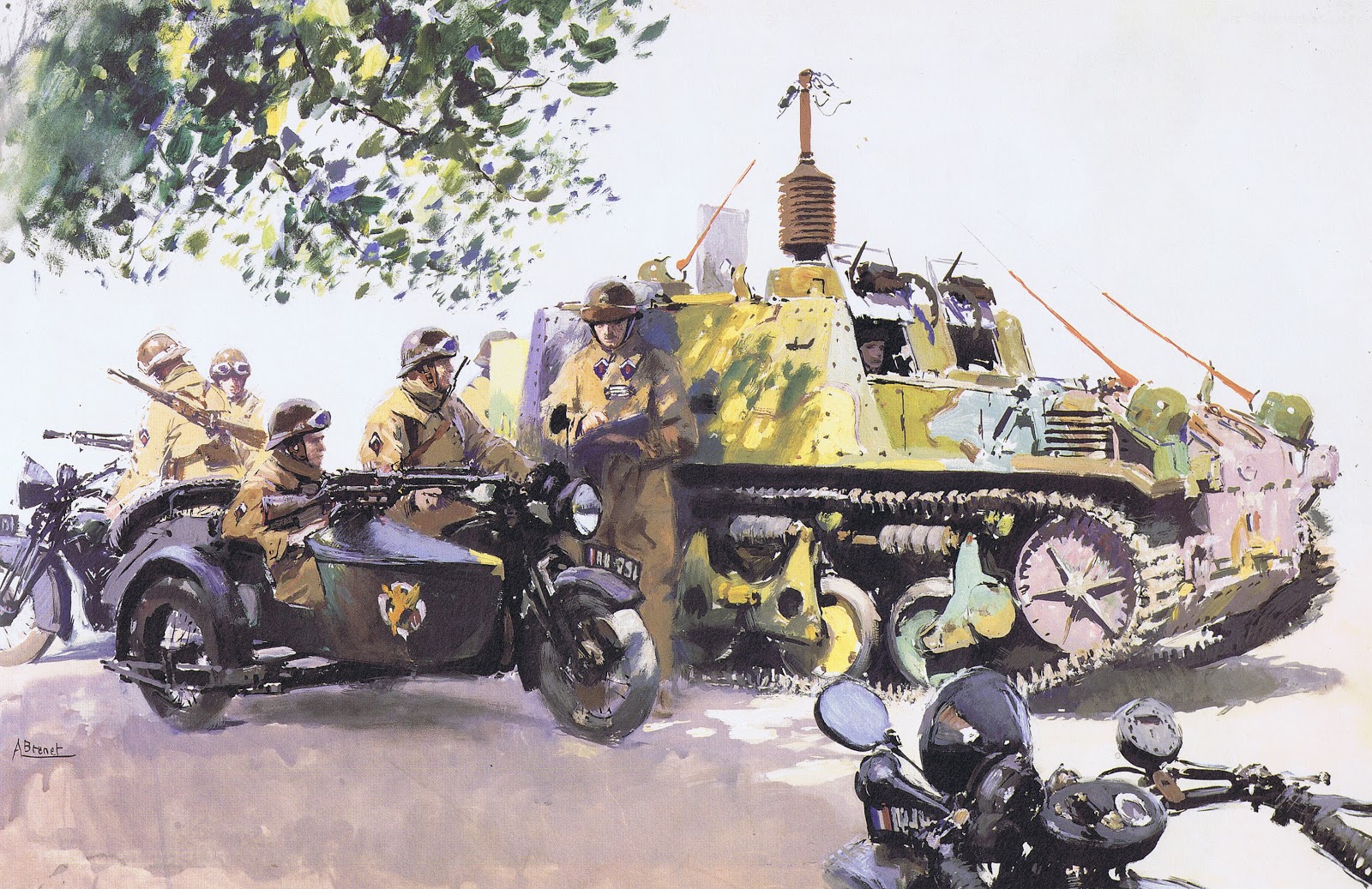
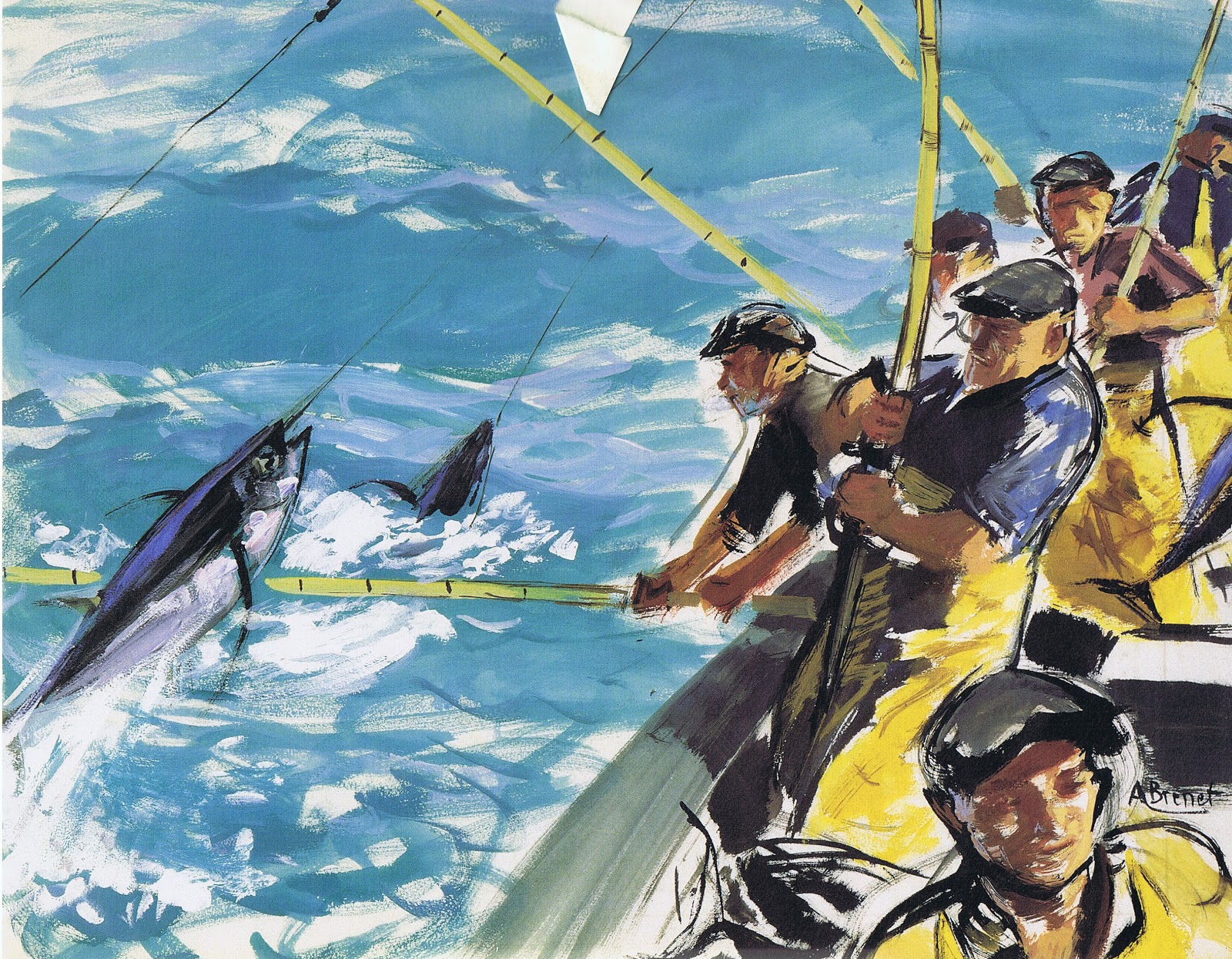
Albert Brenet


My rediscovery of this extraordinary French artist frustrates me for a couple of reasons:
First of all, since he passed away as recently as 2005 in Paris, I could have made the effort to meet him, when I was living there. 
Secondly, I love his animal studies, but very little of this work is published or available elsewhere.

Brenet was born in 1903, he showed artistic talent at a very early age, and in 1920 he enrolled in the Ecole des Beaux-Arts in Paris. His main focus became animal painting. 
In 1929 his artistic interests changed when he boarded a trade sailing vessel which took him to the West Indies on a seven month journey. He became fascinated with daily life onboard, and started to paint the ship's crew, see ports and people from foreign cultures.
Later his objects were also airplanes, trains and scenes from manufacturing factories.

This is some of his early spectacular animal work.


Bad photocopies, but unbelievable drawings. What power!


This one is a killer - no pun intended. Great inspiration for my film!


These paintings represent a small cross section of his life's work.
The style reminds me of some American Illustrators from Brenet's generation. Confident brush strokes loosely applied give you accurately observed environments and situations.


His paintings often seem to approach photographic realism. 
But just like a John Singer Sargent painting, the result is actually impressionistic.


I still haven't given up on sometime finding more of his great animal studies.

Monday, March 18, 2013

Searching for the Perfect Pose


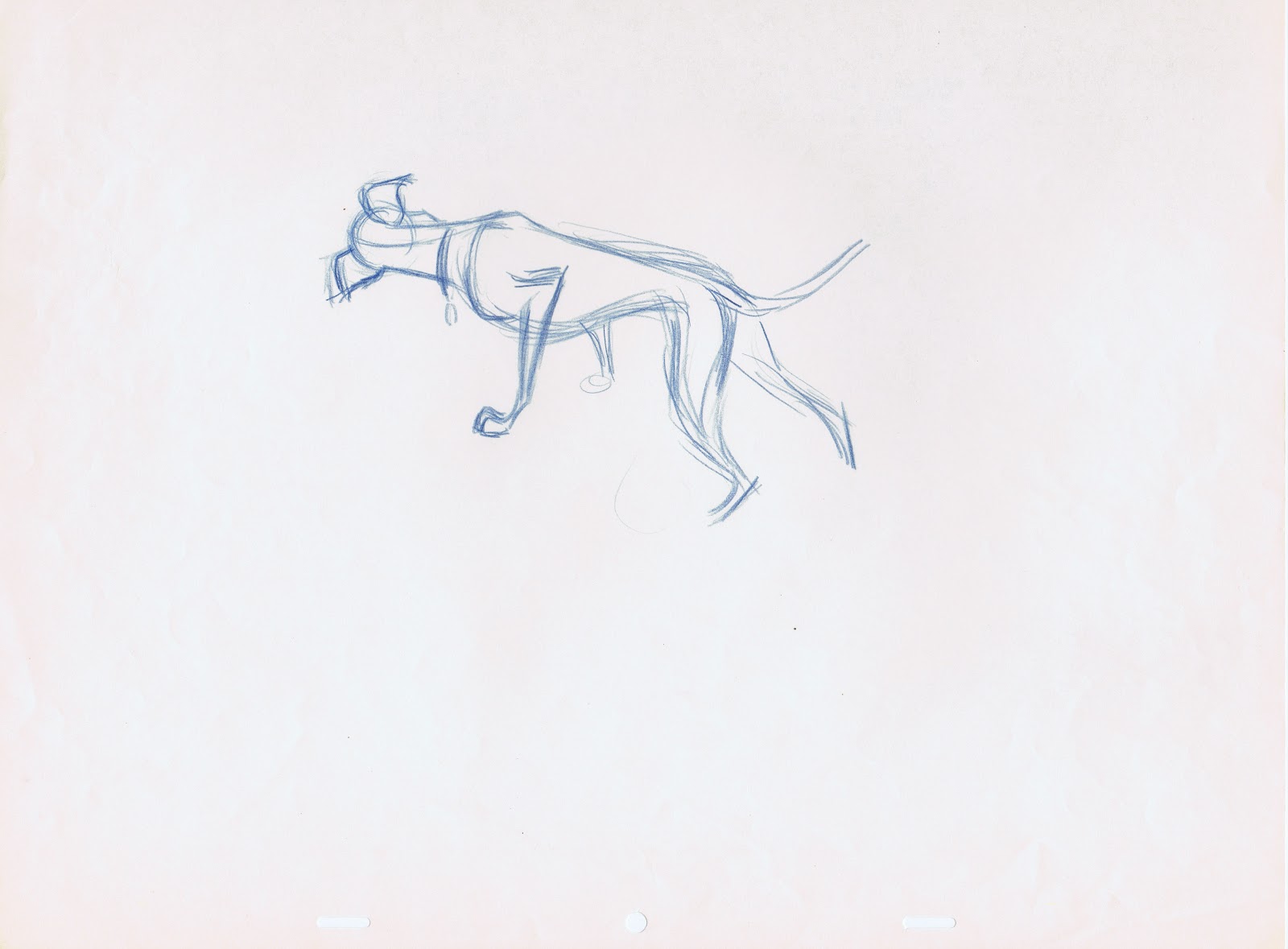
Ollie Johnston animated this short scene with Pongo, who is trying not to loose sight of Anita and Perdita who are heading for the park. After a brief pause he leaps off the window ledge toward screen right.
What happens then is Pongo's attempt to convince Roger Radcliff to take him on a walk to the park.

It is fascinating to see how many sketches were made by various artists in order to find the perfect pose for the start of the scene. Since Bill Peet's storyboard didn't include a drawing for this moment, it was up to the animators to work it out.
The challenge is portray a dog from from a 3/4 rear angle, who looks out the window down the street with a sort of anxious attitude.
Above is the final frame from the film, but check out all these drawings.

This is how Frank Thomas analyzed Pongo's pose and its staging.


These could possibly be Ollie Johnston's sketches.


Milt Kahl tried a couple of different versions which helped to solve the drawing problem.


It looks like these animators exchanged drawings and asked each other for help more often than I thought. Then again producing a Disney animated feature is one big team effort.

Sunday, March 17, 2013

Hands


My teacher in art school told me way back: "Once you figure out how to draw hands well, once you know the bone structure and how hands work mechanically and emotionally, the rest of the human figure will come fairly easy to you!"
He had a point. Hands are very complex body parts, and it takes serious study to understand and appreciate their expressiveness. 
In animation it's mostly head and hands working as a unit that communicate the character's emotions. The more comfortable you feel with hands being part of the acting the more successful your scenes will be.
I did these sketches above in preparation for Gaston, who needed to be handled with a fair amount of realism. But even if the style of the film is much more graphic and caricatured than Beauty & the Beast, I think it's always a good idea to research real hands as a basis to start from.

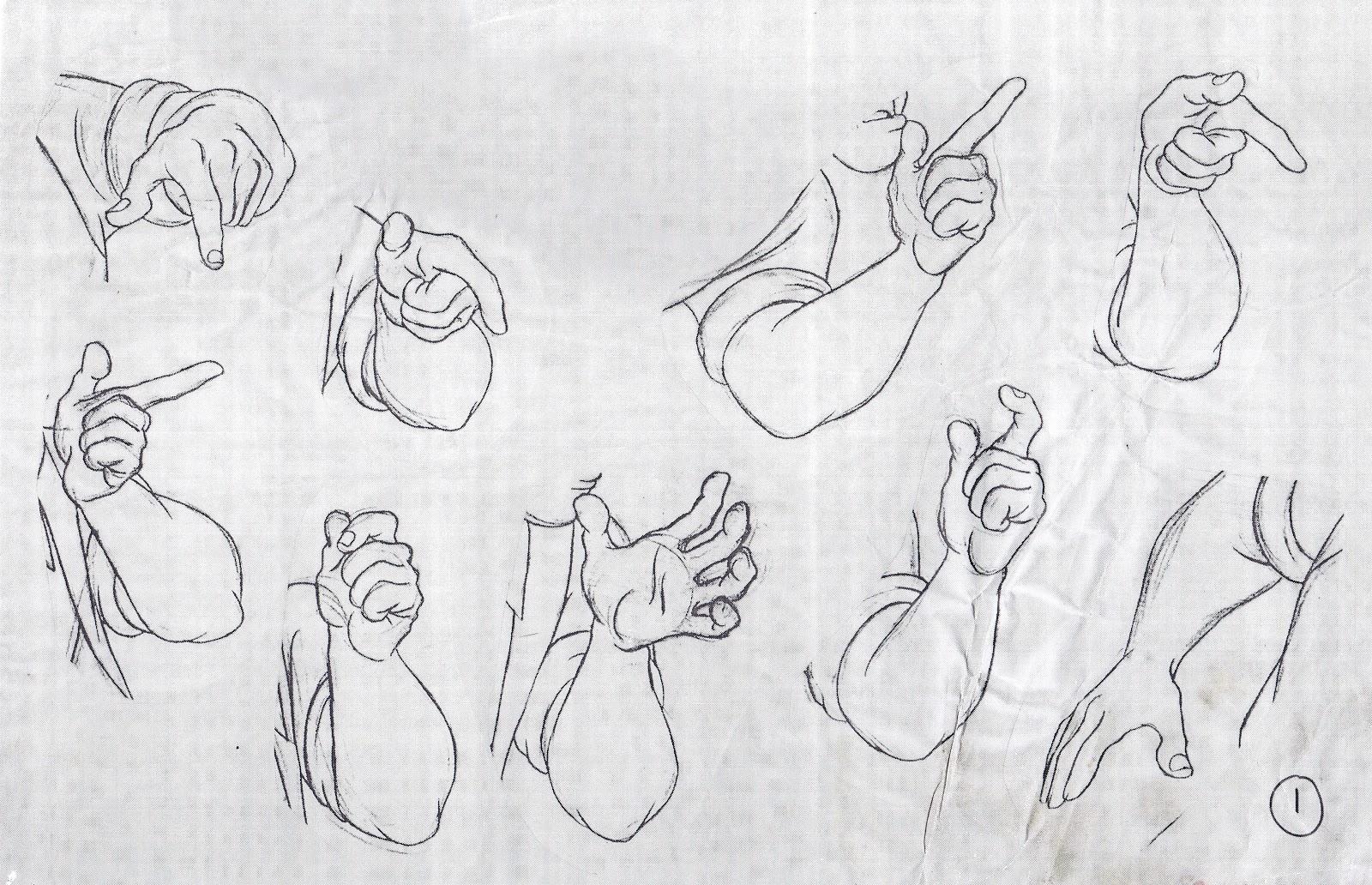
So let's take a look at how animation's master of linear hands Milt Kahl does it.
I made up these sheets of Brom Bones' arms and hands for inspiration and as research for Gaston. Since there is no shading in the drawings Milt makes every pencil line count. Even difficult positions are beautifully depicted, the anatomy is always spot on. Foreshortening, correct placement of fingernails and defining boney as well as fleshy parts, all that doesn't seem to be a problem for Milt at all.


Years later for the characters of The Sword in the Stone Milt pushed the graphic style of hands much further. All those boney knuckles, wrinkles and flesh folds are a joy to study, because this is now sophisticated design.


Ludwig van Drake's hands are much simplified, and the fingers maintain somewhat of a feathery look.


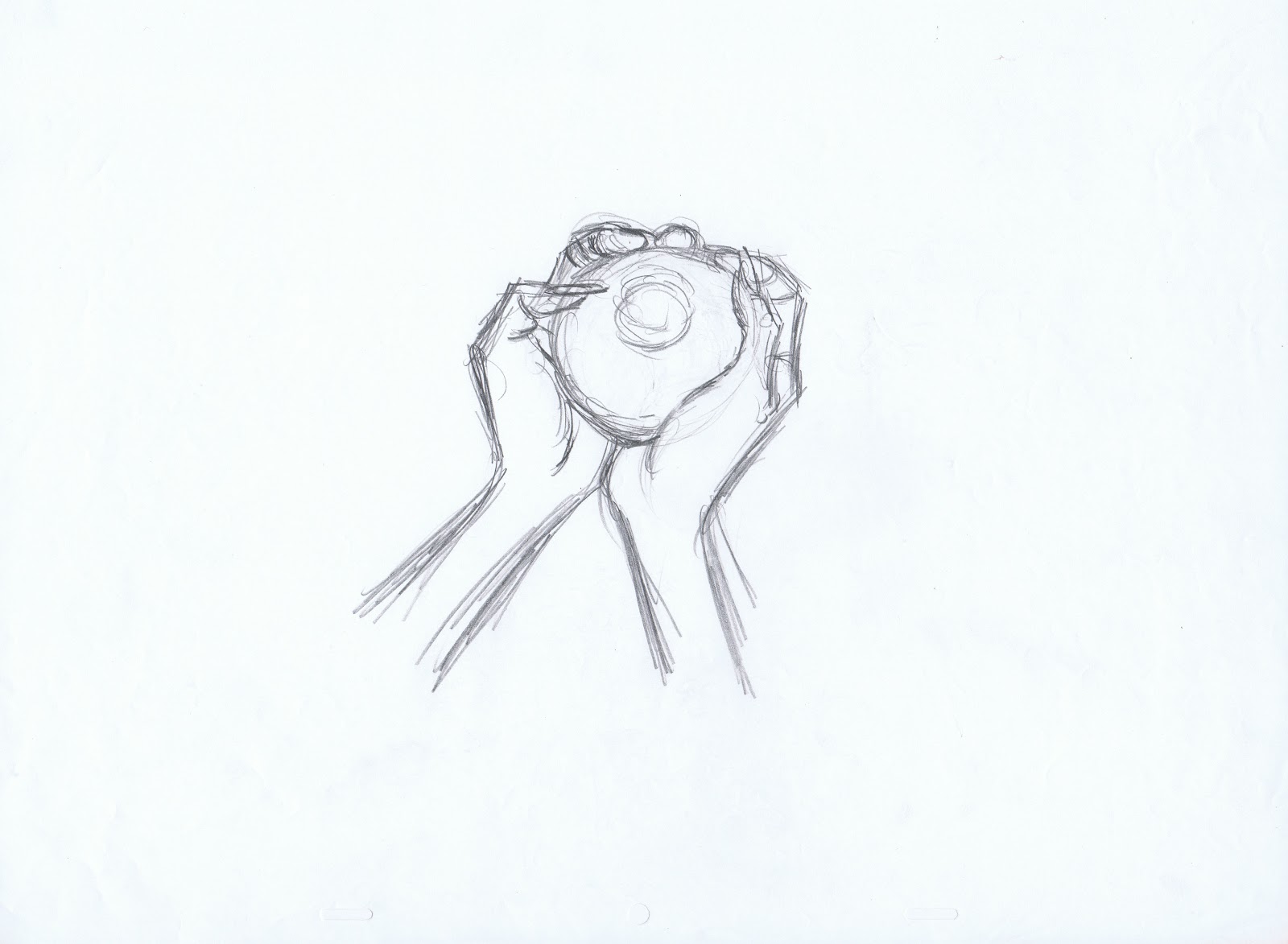
Medusa is about to grab the diamond from Penny, but before that she nervously opens and closes her hands in anticipation. These are the sketches of a master. The perspective just kills me.


Now she has the diamond in her hands and moves it in front of her. Look at the brainwork involved in finding the best staging and design for this short scene.


Thursday, March 14, 2013

Roger Rabbit Screening and Panel


Next month on April 4 the Academy of Motion Picture Arts and Sciences will present a screening of "Who Framed Roger Rabbit" and a panel discussion with some of the film makers.
I am honored to be included, and I look forward to this special evening.

The event is already sold out, but there will be a standby line where tickets might become available in case of cancellations and no shows. Here is the link to the Academy's website:


Way back when the movie turned out to be such a big hit, Disney and Amblin thanked the key animators with this lovely note, and we also received a cel from one of our scenes. In this one Jessica was of course animated by Russel Hall. 
"Let's go home, Roger. I'll bake you a carrot cake!" What a fantastic line of dialogue!

Animation had become cool again. Little did we know that more great projects and huge successes were around the corner.


Wednesday, March 13, 2013

Geppetto


That's animator Art Babbitt animating a close up scene with toymaker Geppetto from the Disney classic Pinocchio. 
I had the chance to meet Art when he was still working for Dick Williams on The Thief and the Cobbler. He didn't mind talking about his Disney years and his strained relationship with Walt.
I remember him saying that after he left Disney he never again animated a character with so much warmth like Geppetto. He felt it was one of the best things he ever did.
I would agree, the level of depth Babbitt was able to inject into the character's acting is astounding.
Geppetto just loves this wooden puppet that came to life, and when he looses Pinocchio, his whole world seems to fall apart. But he still has enough hope and searches on to find his "son".
A real high in character animation.

Below is storyboard like panel which also shows frames from the animators' pencil tests.
Whenever the character drawing is transparent and you see the layout shining through, you are looking at rough animation. 
These Geppetto scenes were animated by Art.


During early design stages Fred Moore helped out with beautiful drawings like these.


More rough exploratory sketches by Fred and probably Art as well.


After clean up artists did their magic you end up with refined drawings like these. 
The feeling of real volume is unbelievable. There is a thickness in the vest, the shirt and the apron.
And look at the subtle squash on the two fingers holding the string. Just beautiful!


For much more on Art Babbitt's animated life go to Jake Friedman's outstanding blog:

Monday, March 11, 2013

Insightful Comments

In this clip from the 1977 UK TV show Ken Anderson, Ward Kimball, Marc Davis and Frank Thomas remember Walt Disney, Mickey Mouse and what it was like working at the studio in the old days.
I find these reflections fascinating, Frank Thomas might be exaggerating a little when he talks about relationships among the artists. Sure, there were egos, likes and dislikes, but in general these guys respected each other for their unique talents and contributions to the films.
I know this because they told me so, including cranky Milt.