Tuesday, May 24, 2016

The Frank Thomas Style


I don't know what Frank is working on in this photo, as he poses with the Oscar the studio has just won for Winnie the Pooh and the Blustery Day. Perhaps a gag drawing, since the main production at the time was The Aristocats. There are mounted character sketches of Scat Cat on the upper right corner.
It is always interesting to take a closer look at Frank Thomas' rough animation drawings. Unlike some of his colleagues, he rarely thinks about creating a graphic design in his drawings. The source for his inspiration is strictly the character's personality and its entertainment value in a particular scene or sequence.
For his rough animation pass, he would do more drawings than most other animators at the studio. More often than not Frank created ALL drawings for his scenes. This meant that there really wasn't much time left to finesse each key drawing to perfection. This is an animator with the conviction that each drawing is part of the overall performance. "Suitable for framing" was the farthest thing from his mind. As a result many of Frank's rough animation drawings look "less intimidating" than -let's say- the work of Marc Davis, Milt Kahl or Kimball.
But make no mistake, a Thomas pencil test has a magic all to its own. The quality of the performance as well as acting choices appear completely natural. The character lives on his own on the screen, detached from an animator's creative process. A tremendous achievement.


 These two Merlin key drawings are somewhat of an exception to what I just described. Because these poses needed to be held for a brief time in order to sell the comedy in the action, Frank made sure that they hold up as individual poses, with clear staging and silhouette.


Ollie Johnston and Milt Kahl drew Mowgli in a more appealing way than in these images, but the scene's motion feels like real life. A kid trying to get away from a Python's grasp, everything has proper weight, timing and most importantly - emotion.


Frank did all drawings for this King Louie scene in order to control the subtle, musical bounce, as the  character turns his head toward Flunky, who mimics his singing technique.
Assistant Dale Oliver cleaned up the loose drawings on new sheets of paper.


A simple character sketch of Edgar from The Aristocats. This single drawing doesn't sell the scene, but in sequence with all the other drawings magic happens.


One of Frank's last scenes before putting down the pencil. From then on teaching Disney principles and philosophy (through books) became the focus of this master animator. 


A list of Frank's animated achievements as put together by The Disney Archives years ago.


Many more of Frank Thomas' drawings in this earlier post:

http://andreasdeja.blogspot.com/2011/06/frank-thomas.html


Sunday, May 22, 2016

Sullivant 13


It's been a while since I posted any T.S. Sullivant art. With the hope that I am not including any repeats, here are a few more samples of his always awe-inspiring work.


Friday, May 20, 2016

Pinocchio at the Walt Disney Family Museum


On Tuesday the Walt Disney Family Museum in San Francisco hosted a reception in connection with the opening of a  new exhibition which sheds light on the production of Walt Disney's crown jewel Pinocchio. Several hundred pieces of original art are on display. Here are some of the highlights:

- rough animation drawings in sequence by Bill Tytla, Frank Thomas, Milt Kahl, Ollie Johnston and John Lounsbery. Monitors show these drawings as pencil tests.

-stunning production backgrounds as well as cel set ups.

-enlarges wall-sized storyboards

-vintage audio of Frank Thomas lecturing how (and how not) to animate the character of Pinocchio

This is a breathtaking, world class exhibit, curated by John Canemaker. It will run until January of next year. So, plan a trip to the Museum and prepare to be amazed, enlightened and inspired.
Here is the official link:

http://waltdisney.org/exhibitions/wish-upon-star-art-pinocchio


The two pieces above are not part of the exhibition, but the model of Monstro, the whale, is.


An unusual magazine article to promote the film's original release. It contains more than you ever wanted to know about Pinocchio's conscience Jiminy Cricket. And no...Jiminy is not gay.


Opening night: the Museum's executive director Kirsten Komoroske, Ron Miller (my first boss and Walt Disney's son in law), John Canemaker and myself.


For a Milt Kahl pencil test from a previous post, go here:

https://www.youtube.com/watch?v=amI7HHnlBiE

Wednesday, May 18, 2016

Jungle Vultures II

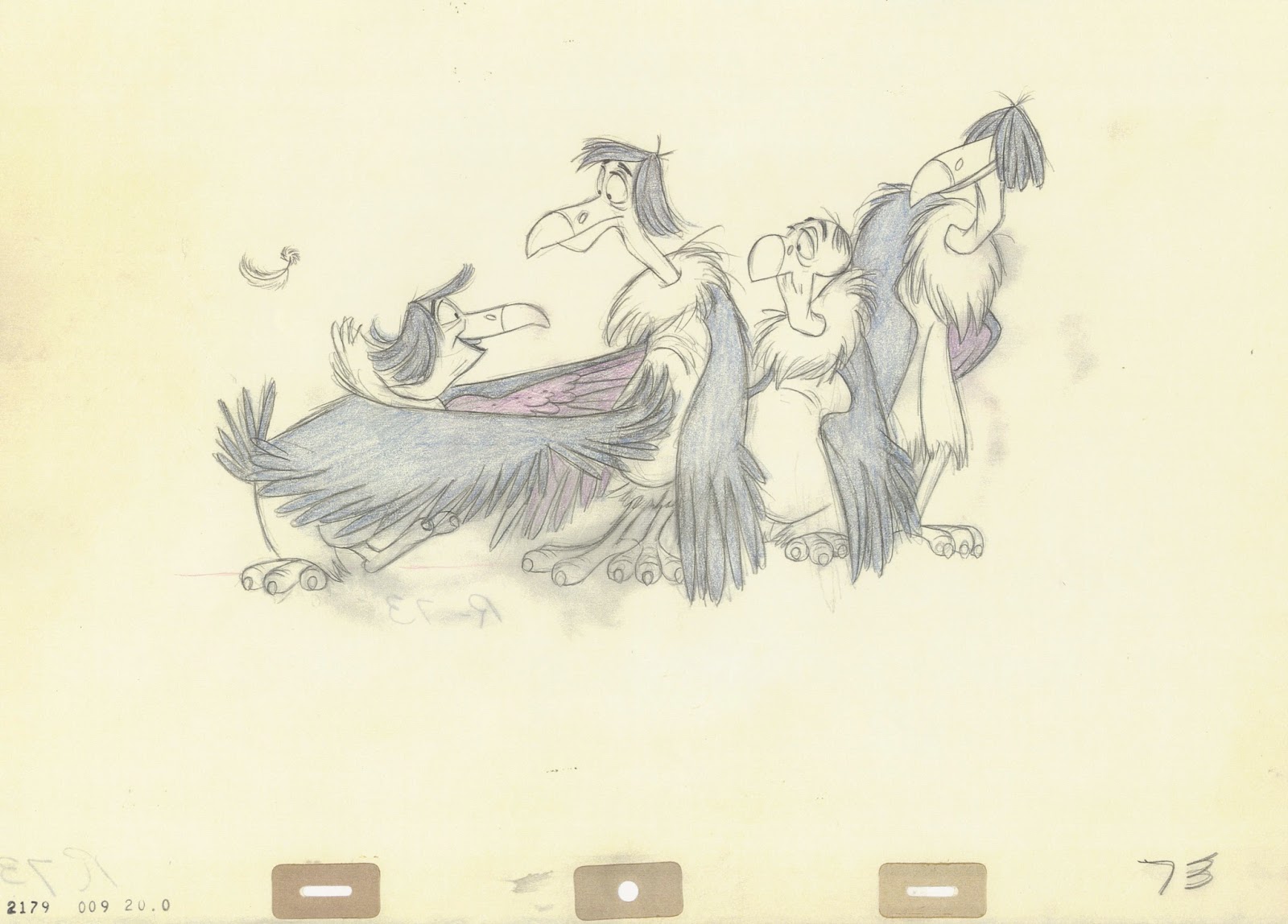
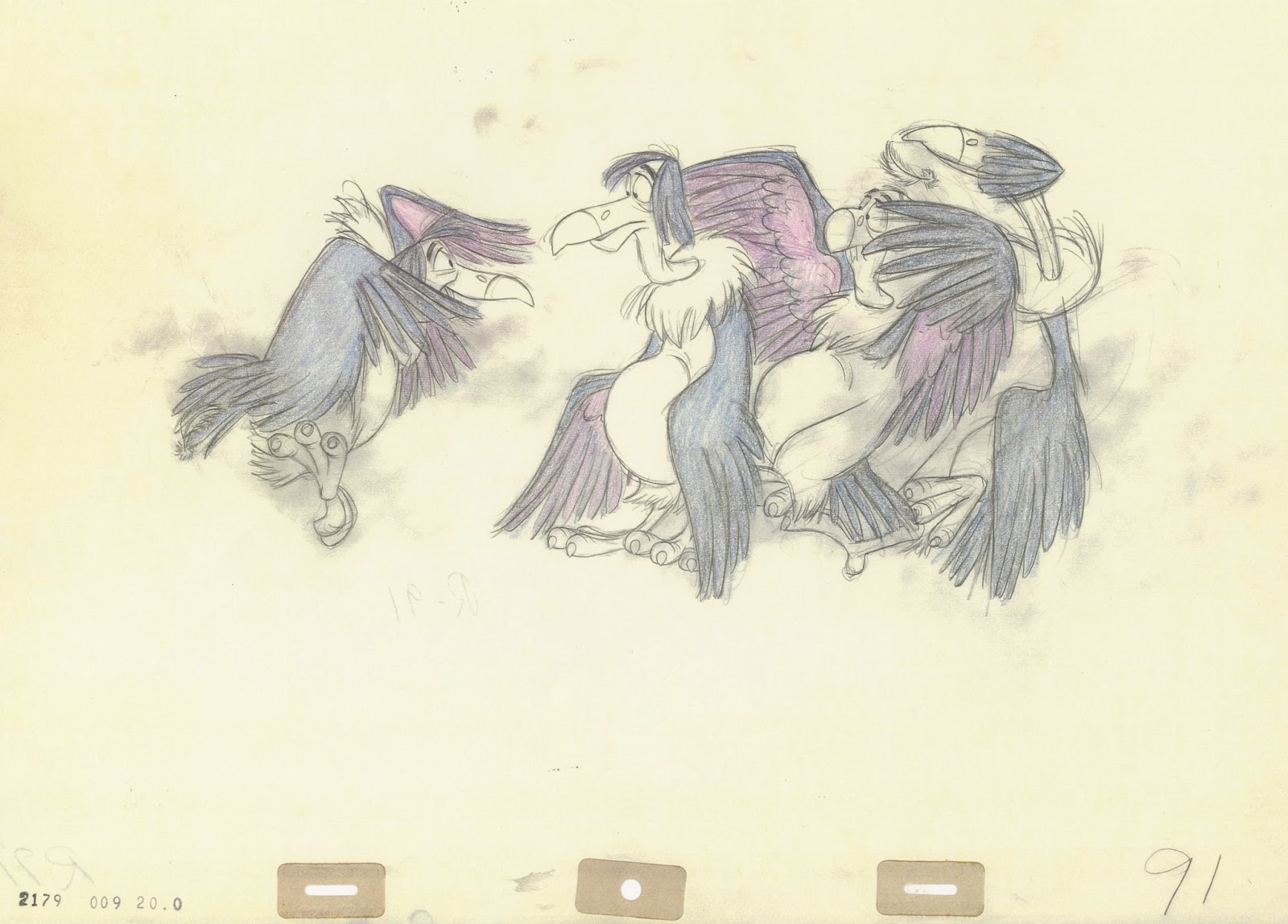
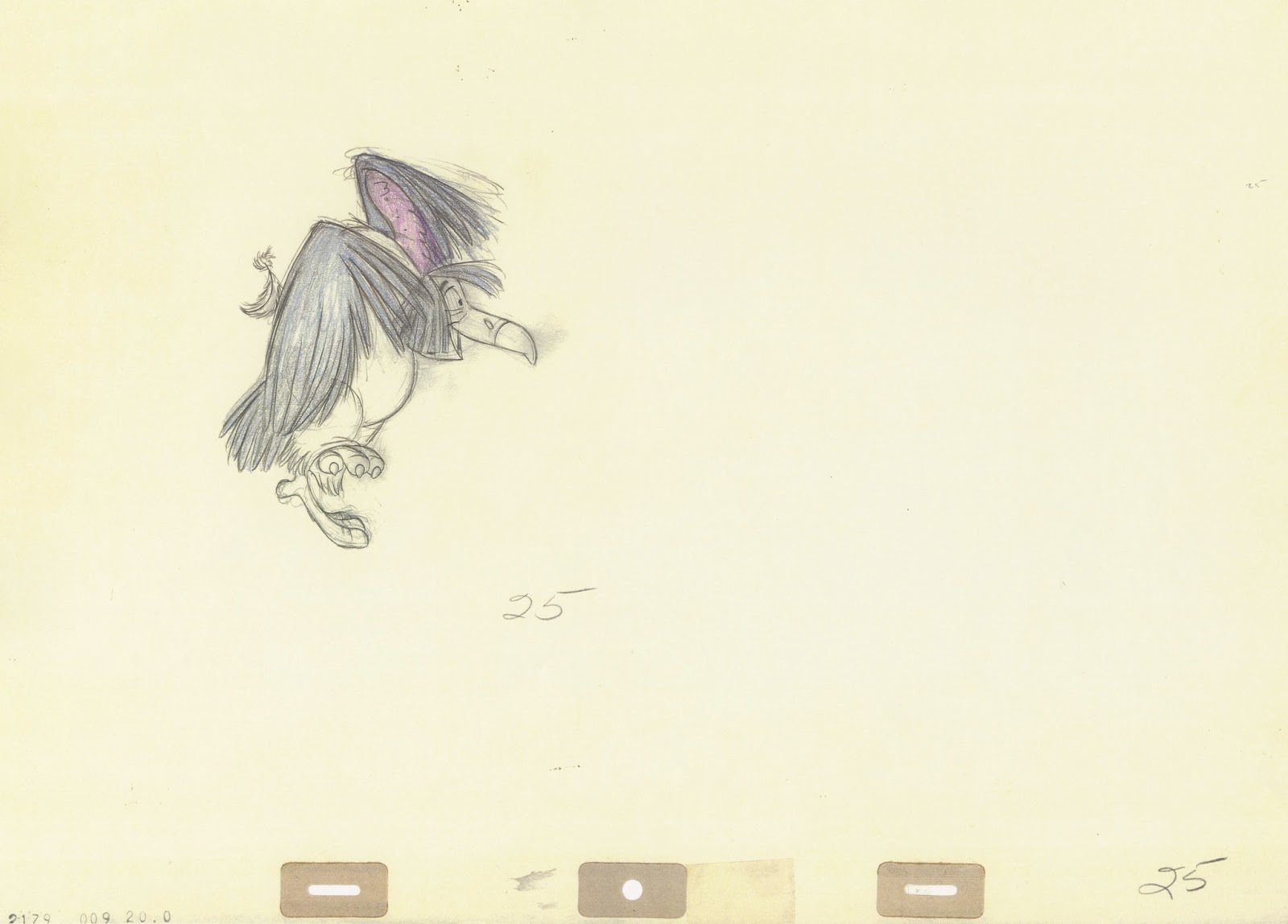
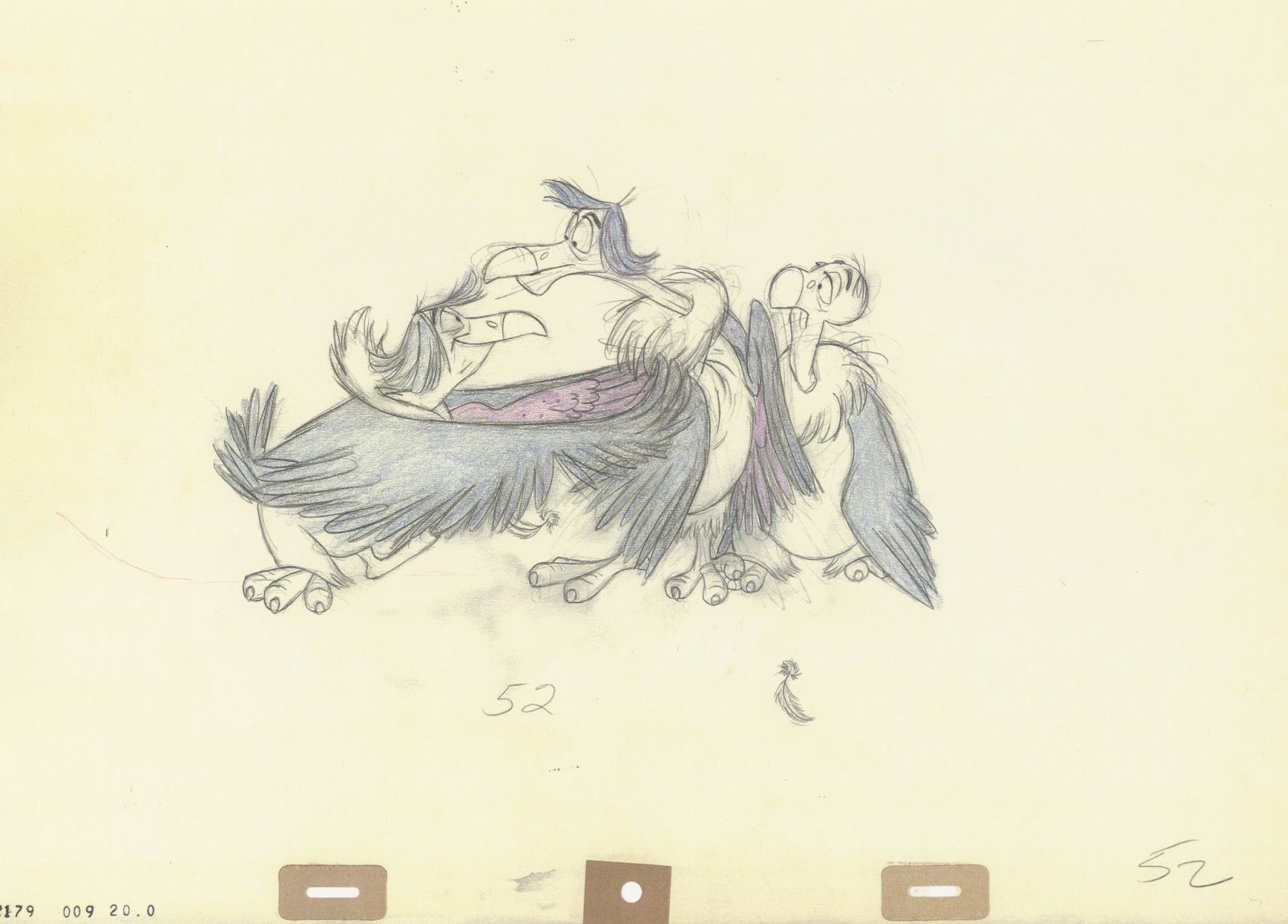
Here is part II of Milt's incredible scene which involves all four vultures. Those two posts only show a few of the main key drawings. From what I can tell, Milt did about every other drawing, twelve drawings for each second. His assistant (likely Dave Michener) then added in-betweens, so the action would be on ones, resulting in twenty-four drawings per second. 
Whatever you think about Milt Kahl as an animator, that man worked HARD! Not only is the intricate animation perfect, each single drawing is a masterpiece in design, and so full of personality!


Monday, May 16, 2016

Jungle Vultures


I am not sure who painted this color key for the opening of the vultures sequence for The Jungle Book, but the dark mood beautifully represents Mowgli's emotions. He is wandering alone through this part of the woods, before the vultures spot him in the near distance.
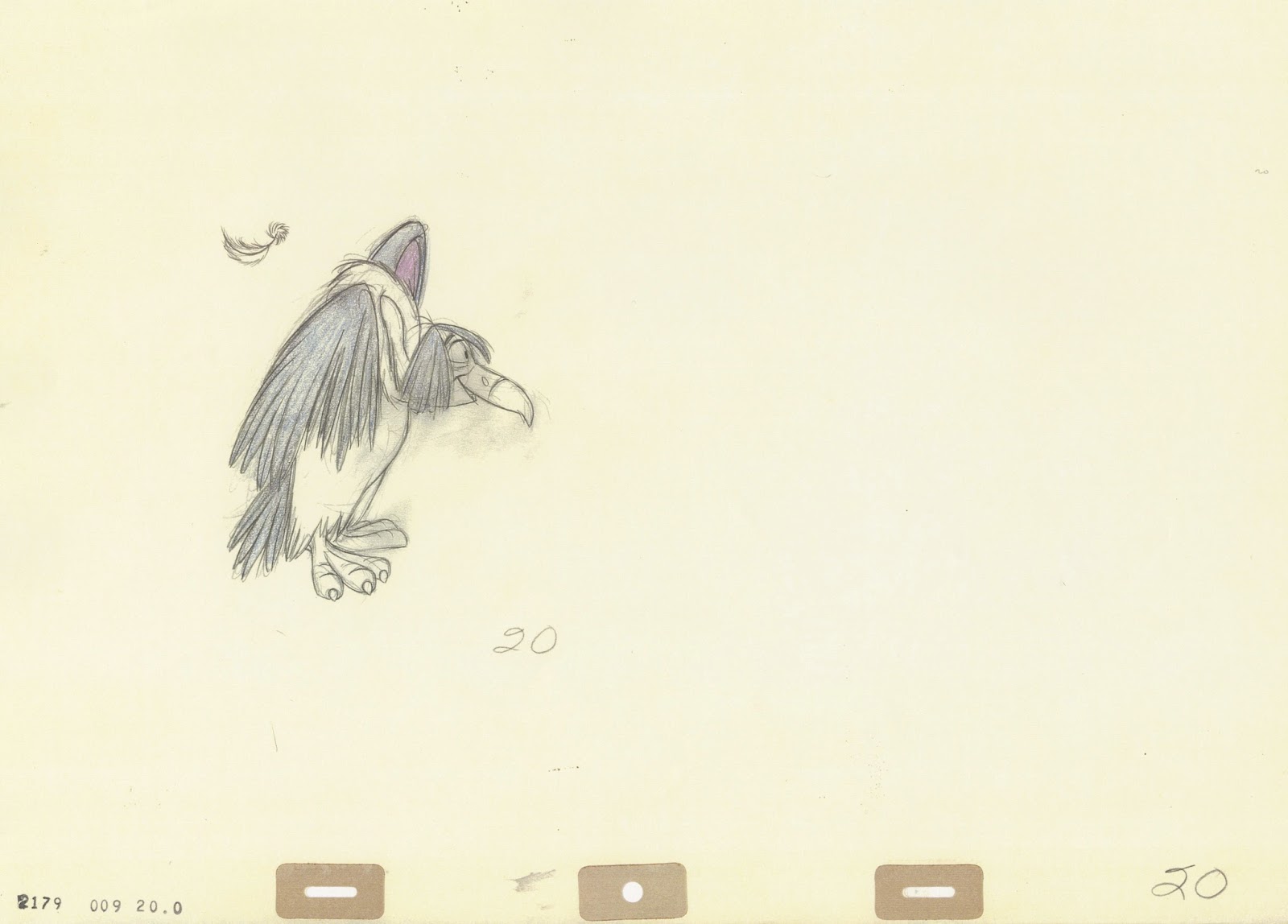
Milt Kahl animated all introductory scenes of these birds, and the following drawings from seq. 9, sc. 20 represent a glimpse into the mind of an animation genius.
One of the vultures, Ziggy, encourages the other three, Dizzy, Buzzie and Flaps to fly down the tree in order to examine this strange looking creature, which is walking on two legs.

"C'mon, lads, c'mon! Let's have some fun with this little fellah, this little blokey."
During this line of dialogue Ziggy moves toward the other three, repeatedly pushing on Dizzy, until one after the other looses their balance and stagger downwards.
A "tour de force" scene, to say the least. The overall motion is all on ones, as one bird after the other is being affected by Ziggy's pushy moves. A friend of mine commented that only a mad man could put all of this together and make it look natural.


This is why I love drawn animation, there is nothing like it!
Part II of the scene coming up.


Saturday, May 14, 2016

Flying Hands


This is the drawing that ended Tim Burton's career as a Disney Feature Animation artist.
Tim had produced endless designs for The Black Cauldron, all of them in his unique, personal style.
When it came time to come up with a look for the monster birds, the Gwythaints, most of us thought of conventional dragons types that would look for and kidnap the oracular pig Hen Wen.
Tim had this great idea for bat-like creatures with a hand shaped head. Everybody was pretty excited about this unusual idea, including myself.
But in the end the producers commented that it reminded them of the surreal 1968 animated film Yellow Submarine, a style they deemed  inappropriate for The Black Cauldron.
Tim left the production shortly thereafter, and produced a beautiful animated short stop motion film called Vincent.
It wasn't until after he left Disney that he became THE Tim Burton, when he was given the chance to put his mark on many live action as well as animated films alike.

More of Tim's work here:

http://andreasdeja.blogspot.com/2011/09/tim-burton.html